
E-commerce at
Williams-Sonoma
Harvard Business School Case

The Williams-Sonoma case describes a company that understood, long before most other retailers, that digital commerce was not an add-on, but a fundamental transformation of the entire structure of the business. The case begins with the company’s origins and its development into one of America’s strongest catalog and retail companies, showing how identity, quality, and aesthetics formed the foundation of the business even before the age of digitalization.
What stands out in particular is how the catalog business gave Williams-Sonoma a unique analytical culture. Catalog operations are built around targeting, testing, segmentation, and insights into customer behavior. This meant that the company became accustomed to working in a data-driven way early on — something that later became an enormous competitive advantage as e-commerce began to emerge.
1. From Catalog Heritage to Digital Strength
2. Bridal Registry: An Early Digital Identity Platform
A central point in the case is the development of the “bridal registry.” What began as a traditional wedding service turned out to be a digital gold mine. Couples entered detailed wish lists, preferences, products, and price ranges, giving Williams-Sonoma insights into their life stage, tastes, household, and future needs.
This became an early form of digital identity understanding — a system resembling what would later become CRM, single customer view, and customer lifetime value analysis. The Harvard case explains how this became a strategic competitive advantage long before most retailers understood the value of customer data.
3. When E-Commerce Arrived — and the Organization Had to Change
When e-commerce was introduced, an organizational shift took place. Launching a website was not enough; the entire way of working had to change. Digital channels required speed, flexibility, daily updates, and continuous optimization — in sharp contrast to the slower rhythm of catalogs and the seasonal focus of store operations.
This created internal tensions. E-commerce challenged traditional power structures and established ways of working, requiring new roles, new skills, and cross-functional teams. The case describes this transformation as challenging, but absolutely necessary.

4. Inventory Visibility: The Hidden Engine Behind Modern Retail
One of the most significant findings in the case is the importance of inventory visibility. As e-commerce grew, customer expectations changed dramatically. Suddenly, customers expected:
-
accurate inventory information
-
fast delivery
-
click-and-collect options
-
seamless returns
To succeed, Williams-Sonoma had to build real-time integration across stores, catalogs, e-commerce, and logistics. This represented a major technological undertaking, but also a strategic choice that would later become the foundation of modern omnichannel and unified commerce.
5. Cultural Clash Between Stores and Digital Growth
The Harvard case clearly illustrates the friction between a traditional retail culture and the demands of digital commerce. Store managers were accustomed to seasonal rhythms, visual merchandising, and the physical flow of goods. Digital commerce required rapid decision-making, technical expertise, continuous testing, and data-driven decisions.
This cultural conflict is one of the most instructive elements of the case: forward-looking solutions often encounter structures rooted in the past. Williams-Sonoma moved forward by building bridges rather than creating new silos.
6. Brand Consistency as Strategic Capital
The company had already established strong brand universes — Williams-Sonoma, Pottery Barn, PB Kids, and West Elm. The case shows how digital commerce required consistency across every touchpoint: aesthetics, language, tone, navigation, and identity.
Digital commerce made it clear that a brand does not live only in catalogs and stores; it lives in every single click, image, and piece of text. This was a precursor to modern content governance and omnichannel brand management.

7. New Management Models, P&L, and the Organization of Technology
The case describes how the company had to redefine its management model. Traditionally, the stores had P&L responsibility and controlled large parts of the sales operation. When e-commerce entered the picture, questions arose about:
-
who “owns” the customer
-
where revenue should be allocated
-
which departments should be rewarded
-
how technology should be organized
Williams-Sonoma chose to give its digital units real decision-making authority and responsibility — not as a support function, but as a strategic engine. This was unusual in 2009, but proved to be the right approach.
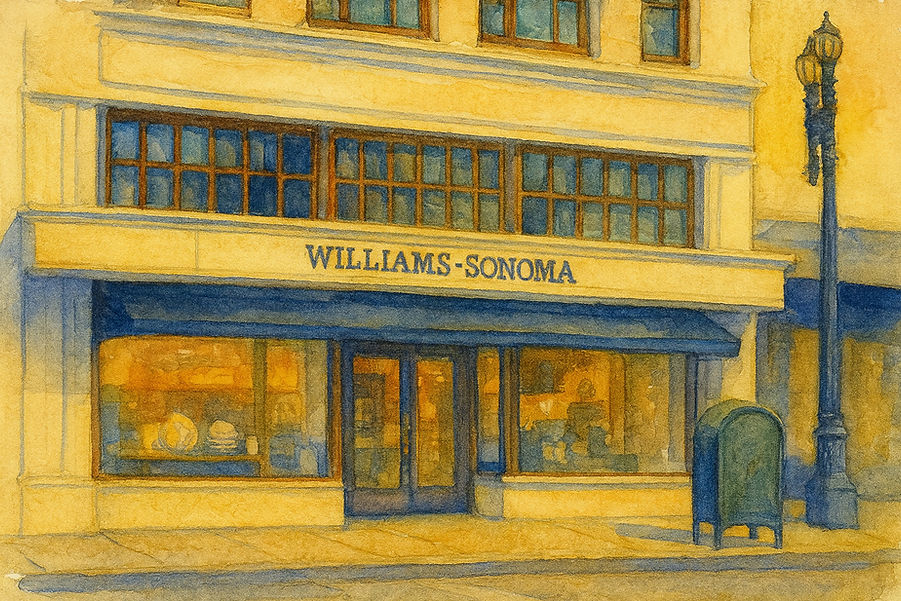
8. Customer Service as an Integrated Part of the Value Chain
The case also shows how customer service became a central part of the digital transformation. E-commerce did not end at checkout; the customer journey continued through delivery, returns, support, and follow-up.
Williams-Sonoma integrated customer service throughout the entire value chain, increasing both loyalty and efficiency. This was an early insight into something that would later become standard in modern retail: customer service is a strategic function, not a cost.
9. Strategic Integration — E-Commerce as an Extension of the Company’s DNA, Not a Competitor
The most impressive aspect of the case is the company’s mindset. While many retailers viewed e-commerce as a threat, Williams-Sonoma saw it as an extension of its own DNA: quality, storytelling, consistency, and customer focus.
The company used digital commerce to strengthen its existing values rather than replace them. This created an internal drive for change that many of its competitors lacked.
10. Unified Commerce Before the Term Existed
Even before the term “unified commerce” existed, Williams-Sonoma operated as if it were already the norm. The company worked to address:
-
channel balance
-
incentive structures
-
data integration
-
logistics flows
-
a consistent brand experience
This made Williams-Sonoma a pioneer of the kinds of experiences that are taken for granted today: seamless interactions, a single data set, one brand, and one customer experience.
11. Why Williams-Sonoma Became a Pioneer
The case concludes with a complete picture of why the company became one of the first true cross-channel winners in the United States: it was willing to tackle the difficult problems. Not just the technology, but the people. Not just the structures, but the culture. Not just the sale, but the entire journey.
The company understood something fundamental: the customer will move across channels — and the brand must move with them.
This became the foundation for a transformation that later gave Williams-Sonoma a position few other retailers were able to replicate.
My blog


Recommended Professional Literature

Internet Marketing and e-Commerce
A key book from the early eMarketing era, written by Ward Hanson and Kirthi Kalyanam. The book shows how the internet began to transform marketing, CRM, and digital commerce through new digital business models and customer journeys.


Marketing Management
Philip Kotler’s best-known book and one of the world’s most widely used textbooks on marketing and strategy. The book provides a comprehensive understanding of how organizations create value through customer insights, segmentation, brand building, relationships, and long-term strategy.

Marketing 4.0: Moving from Traditional to Digital
In this book, Kotler explores how digitalization, social media, and mobile platforms are changing customer behavior and marketing. The book describes the shift from traditional marketing toward a more digital, social, and human-centered customer experience.
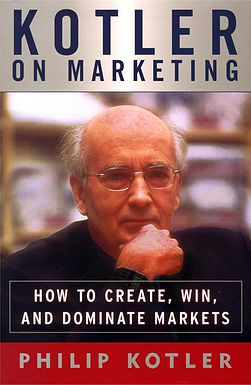
Kotler on Marketing: How to Create, Win, and Dominate Markets
A practical and strategic book in which Kotler summarizes key principles of modern marketing, customer orientation, and competitive strategy. The book combines theory and experience with reflections on how markets and customers evolve over time.