
San Francisco 2010
The Era of Smart, Connected and Human-Centered Innovation

Introduction and Context
The 2010 San Francisco Seminar marked a clear shift in focus. After several years in which technology, digitalization, and multichannel strategies had taken center stage, the focus now shifted toward service innovation, creativity, and human interaction. The OECD report The New Nature of Innovation provided a backdrop for the entire program. While previous years had focused on digital channels and tools, 2010 was about how people, organizations, and technology interact in the development of value-creating services.
The OECD introduced a new understanding of innovation as something that does not emerge solely in laboratories and research environments, but also through interactions among users, society, and technology. Networks, openness, knowledge sharing, and experimentation were emphasized as defining characteristics of the new innovation economy.
Throughout the week, a common thread ran from design thinking and collective creativity to business model innovation and smarter organizations. The seminar reflected a global shift: we were moving from developing products to designing experiences and systems—from things we sell to services we create together.
Program Overview
The program brought together speakers from academia, business, and technology, representing a unique blend of research, practice, and strategy:
-
OECD – The New Nature of Innovation
-
Stephen Ezell (ITIF/Peer Insight) – Service Innovation & The Age of Smart Services
-
Tim Brown (IDEO) – Design Thinking
-
Teresa Amabile (Harvard Business Review) – How to Kill Creativity
-
Ed Catmull (Pixar) – Fostering Collective Creativity
-
Steven Kowalski (Genentech) – Corporate Innovation and Creativity
-
General Electric (GE) – How GE is Disrupting Itself
-
IBM – Smarter Planet and Innovation Leadership
-
Kirthi Kalyanam (Santa Clara University) – Making Business Sense of Social Media
-
Alexander Osterwalder – Business Model Canvas
-
Johnson, Christensen & Kagermann – Reinventing Your Business Model
-
Blue Ocean Strategy (Kim & Mauborgne) – Value Innovation and Strategic Clarity
-
Swisscom – Service Champion Journey
Key Themes
Service Innovation and the Smart Economy
Stephen Ezell of ITIF described how economies around the world are shifting from the production of goods to the delivery of services. He introduced the concept of Smart Services—services that combine data, technology, and human insight to create continuous value for users.
Ezell showed how IT is no longer merely a support function, but a catalyst for innovation.
Design Thinking and Human-Centered Innovation
Tim Brown of IDEO highlighted Design Thinking as both a method and a mindset. Through empathy, prototyping, and cross-functional collaboration, complex problems can be broken down into understandable and tangible solutions. He pointed to the Kaiser Permanente case, where redesigning hospital processes led to a better patient experience and greater efficiency.
Creativity, Culture, and Leadership
Teresa Amabile highlighted how structure, control, and the wrong culture can kill creativity. She introduced the concept of intrinsic motivation—what drives people to create because they want to, not because they have to.
Ed Catmull of Pixar followed with lessons from the film industry: “Management’s job is not to prevent failure, but to build the capacity to recover from it.” Pixar demonstrated how trust and psychological safety are essential to creative success.
Social Media and Collective Intelligence
Kirthi Kalyanam showed how companies can understand and leverage social media as an ecosystem for attention and trust.
HP Labs (Bernardo Huberman) explored how collective intelligence works: people do not simply seek information—they also seek validation from others. As a result, attention becomes a currency in its own right.
Business Model Innovation and Strategic Renewal
Johnson, Christensen, and Kagermann introduced a model for how companies can rethink their business models—particularly when new technologies change the rules of the game.
Alexander Osterwalder followed with the Business Model Canvas, which provides a visual framework for innovation.
GE and IBM illustrated how large organizations can reinvent themselves from within. GE through reverse innovation—developing innovations in emerging markets—and IBM through its Smarter Planet initiative, where data and societal needs came together.

Case Studies
Pixar – Collective Creativity in Practice
Pixar became a textbook example of an organization where creativity is systematic and structured, but never bureaucratic. Catmull described how leadership is about protecting creative processes from fear.
Every film goes through hundreds of failures before it succeeds—and that is exactly what makes it great.
GE – “Disrupt yourself before someone else does”
GE challenged its own way of thinking. Instead of developing advanced technology in the United States and then exporting it, the company began creating more affordable, simpler solutions in China and India—and then bringing them back to Western markets. This became known as reverse innovation.
IBM – Smarter Planet
IBM presented its Smarter Planet initiative, a global framework in which technology is used to address societal challenges in areas such as healthcare, transportation, energy, water, and education. Their message was clear: “Innovation happens when we connect people, processes, and data—not just machines.”
Google – The Innovation Machine
Google shared lessons on how to sustain innovation at scale: an open culture of sharing, the 20 percent rule, small autonomous teams, and data-driven experimentation. The combination of freedom and structure creates what Google calls “a constant beta culture.”

Reflections and Discussion:
The seminar clearly demonstrated that innovation was no longer a niche field, but a discipline that must be managed and measured across sectors.
Common themes across all the presentations included:
-
Innovation emerges at the intersection of people and systems.
-
Technology is the tool—not the goal.
-
Culture and leadership are the true differentiating factors.
Participants discussed how public-sector organizations could adopt the same principles. The idea of the “user as a co-producer” was highlighted as equally important for local and national government services.

International Perspectives
The OECD report provided a strong international framework.
-
Europe was described as more consensus-driven, but also slower in its decision-making processes.
-
The United States stood out for its culture of experimentation, high appetite for risk, and willingness to fail fast.
-
Asia, particularly Korea and Japan, combined discipline with a long-term perspective.
These differences were not viewed as weaknesses, but as distinct models of innovation. The goal was not to copy Silicon Valley, but to understand what makes different ecosystems productive and human-centered.

What Do We Take Home?
-
Design Thinking works across all industries—not just in design.
-
Creativity must be led, not controlled.
-
The user is not a data point, but a participant.
-
Large organizations can reinvent themselves if they are willing to experiment.
-
Business models are living documents, not static plans.
-
Social media is about relationships, not advertising.
-
Data and insights must be used to build trust.

Relevance Today
Much of what was discussed in San Francisco in 2010 later proved to be ahead of its time.
The principles of Design Thinking and Smarter Planet now underpin everything from digital service development in local government to strategies for sustainability and artificial intelligence. In the Norwegian context, we see clear parallels: the public sector has adopted methodologies from IDEO and the OECD—user journeys, co-creation, and cross-functional teams are now standard practices in digitalization projects.
The lessons from 2010 remind us that the future is shaped not only by technology, but by human empathy and collaboration. That is still what distinguishes good services from poor ones, and societies built on trust from societies shaped by fear.
Peder Inge Furseth
Peder Inge Furseth was a key academic driving force behind the San Francisco seminars and played an important role in making the encounter with Silicon Valley relevant to Norwegian and European organizations. Through his role as a professor at BI Norwegian Business School and as academic director of the program, he helped participants place the presentations within a broader context—one in which technology, innovation, business development, and people had to be understood together.
In San Francisco, participants met entrepreneurs, researchers, technology leaders, and investors from some of the world’s most innovative environments. Furseth’s strength was his ability to connect these experiences with practical challenges and opportunities facing Norwegian organizations. He helped translate Silicon Valley’s ideas and ways of working into a
Nordic context where collaboration, trust, and long-term value creation play a central role.
Throughout the seminar series, he served as an important bridge between research, business, and technology. For many participants, he therefore became more than an academic leader—he was also a mentor who inspired them to think differently about innovation, digitalization, and commercialization.
Learn more about Peder Inge Furseth here
From Studies and Seminars to Today’s Knowledge Hub
The studies, seminars, and academic trips documented on this page form part of the knowledge base behind The Invisible Capital. Topics such as customers, technology, innovation, digitalization, and value creation have been part of this journey for several decades — while these fields have continued to evolve.
At The Invisible Capital, we continue exploring these questions through dedicated knowledge series. Here, earlier theory, research, and experience are connected with newer knowledge, emerging technologies, and today’s challenges facing people and organizations.
Innovation
Innovation is not just about new ideas. Value is created when knowledge, technology, and ideas are developed into products, services, processes, organizational forms, and business models that are actually put into use. The series on innovation traces the field from Schumpeter to modern innovation research and explores incremental, radical, disruptive, open, and user-driven innovation.
→ Explore the Innovation series
The Customer
The customer is not simply the recipient of what an organization produces. In a competitive market, the customer is a decisive factor in whether an organization actually succeeds in creating value. The series on the customer explores customer orientation, customer insight, customer experience, satisfaction, loyalty, trust, and the human interactions that shape the customer relationship.
→ Explore the Customer series
Value Creation
What does it really mean to create value — and who creates it? The Value Creation series moves from economic theory and influential thinkers to a broader understanding of how people, knowledge and skills, institutions, organizations, and the public sector contribute to value creation.
→ Explore the Value Creation series
Digitalization
Digitalization has evolved from individual technologies into a fundamental part of how organizations operate and create value. The Digitalization from A to Z series traces this evolution through the internet, the web, e-commerce, search, UX, social media, mobile, omnichannel, cloud, data, platforms, and digital transformation — leading up to today’s AI-first era.
→ Explore the Digitalization from A to Z series
Artificial Intelligence
Artificial intelligence represents the next chapter in the digital evolution. In our dedicated AI knowledge hub, we explore how artificial intelligence works, how AI finds and uses information, how it evaluates sources and websites, and what this development could mean for people, organizations, and value creation.
→ Explore the articles on Artificial Intelligence
Recommended Reading
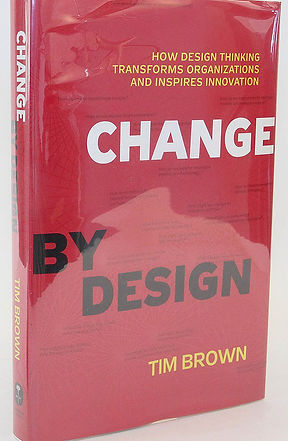
Change by Design: How Design Thinking Transforms Organizations and Inspires Innovation
Tim Brown shows how Design Thinking can be used to create innovation, services, and business models with people at the center. The book explains how creativity, experimentation, and cross-functional collaboration can help organizations develop better products, services, and customer experiences in a digital economy.


