
Long Tail – the theory that changed e-commerce, the internet and the digital economy

Why can thousands of niche products, specialized services, and narrowly focused articles collectively create greater value than a few bestsellers? In this article, we explore Chris Anderson's groundbreaking Long Tail theory from Wired (2004) and the book The Long Tail (2006), and shows how it has changed e-commerce, digital marketing, search engines, customer experience and the digital economy. Based on Anderson's original theory, we analyze why the Long Tail remains one of the most important models for understanding Amazon, Google, Spotify, YouTube, artificial intelligence and the modern knowledge universe - and why the theory is more relevant than ever for businesses that want to create long-term digital value creation.

Introduction
When Chris Anderson published the article The Long Tail in Wired magazine in 2004 , he challenged one of the most established truths in business and marketing: that profitability is primarily created through the sale of a few bestsellers. Two years later, he elaborated on the theory in his book The Long Tail: Why the Future of Business Is Selling Less of More , which quickly became one of the most influential books on the digital economy.
Anderson showed that the internet had changed the fundamental rules of the economic game. Where the physical world was limited by store shelves, storage capacity and distribution costs, digital markets could offer a virtually unlimited selection of products. When customers were also given better opportunities to search, filter and receive recommendations, a whole new market emerged where even products with low demand could become profitable.
The Long Tail is therefore much more than a theory about online shopping. It describes a fundamental shift in how value is created, how people find information, and how digital markets work. More than twenty years later, the theory is still highly relevant – perhaps more so than ever .
About Chris Anderson
Chris Anderson is a journalist, author, and former editor-in-chief of technology magazine Wired. He published the article The Long Tail in 2004, before developing the theory further in the book The Long Tail: Why the Future of Business Is Selling Less of More (2006).
Through his work, Anderson described how digital technology changed the relationship between supply and demand, and why the internet made it possible to create value far beyond the market for traditional bestsellers. The theory has since gained significant importance in e-commerce, media economics, digital marketing, and business development.

1. What did Chris Anderson actually say?
To understand the Long Tail, it is important to start with Anderson's own description of the theory before we attempt to interpret or further develop it.
Anderson observed that the traditional economy was built around what he called “hits”—products that sold in high volumes. Bookstores prioritized bestsellers, record stores focused on the most popular artists, and video stores stocked their shelves with the movies most people wanted to see. This was not necessarily because customers simply wanted these products, but because the physical economy forced such priorities.
"The future of business is selling less than more." – Chris Anderson, The Long Tail (2006)
He described the market as a curve.
On the left side of the curve we find what Anderson refers to as the "head" – the few products that sell a lot. These are the bestsellers, the most popular movies, books or songs.
Then the curve extends far to the right. He called this part the "tail". Here we find an enormous number of products that individually sell little, but which together represent a very large market.
The revolutionary thing about Anderson's theory was not that niche products existed. What was new was the realization that when distribution costs become very low and customers can easily find what they are looking for, the sum of all these niche products can be greater than the sales of the traditional bestsellers. The Long Tail is therefore not about replacing the bestsellers. It is about the fact that the digital economy makes it possible to create value both through the most popular products and through an enormous diversity of specialized products that were previously economically difficult to offer.
2. What was the background to the theory?
To understand why Anderson developed the Long Tail, we must first understand the limitations of the physical economy.
A traditional store has limited space. Every book, movie, or CD that fits on the shelves takes up valuable space. Products that sell poorly risk being left in stock for a long time, tying up both capital and warehouse space.
Distribution also represented a significant cost. Goods had to be produced, transported, and stored before they could be sold. The lower the demand, the harder it became to justify the costs.
This naturally led stores to prioritize products with high turnover. Bestsellers reduced risk and provided fast inventory turnover. The result was that many niche products never reached the market, even though they had interested buyers.
The Internet changed this logic.
Digital markets removed many of the physical constraints. Online stores could offer millions of products without being limited by traditional shelf space. Digital products such as music, movies, and software could be distributed without physical warehouses. At the same time, search engines and recommendation systems enabled customers to discover products they would never have found otherwise.
It was this fundamental change that Anderson wanted to explain through the Long Tail.
3. What did Anderson show through research and examples?
To substantiate the theory, Anderson used a number of concrete examples from the emerging digital economy.
Amazon was among the most important.
A traditional bookstore would have to limit its selection to a few dozen or hundreds of thousands of titles. Amazon, on the other hand, could offer millions of books. Many of these sold only a few copies a year, but when millions of such niche titles were made available, they collectively constituted a significant market.
Anderson also pointed to Netflix , which was already challenging the traditional video store business model. Where brick-and-mortar video stores had to prioritize the most popular movies, Netflix could offer a much wider selection through its distribution model.
A third example was the music service Rhapsody. Analysis of usage patterns showed that customers were not just listening to the most popular songs. On the contrary, many were discovering artists and music that had previously been difficult to access. The overall demand for such niche releases was far greater than many had expected.
A common point made by Anderson was that the demand for specialized content had always existed. What was new was that the digital economy made it possible to meet this demand profitably.
4. How does the theory stand up today?
More than twenty years after the publication of The Long Tail, the theory remains relevant. At the same time, digital developments have given it new dimensions that Anderson could only partially foresee.
Streaming services likeSpotify and YouTube are largely based on the same principles. Millions of songs and videos are available simultaneously, and algorithms help users find content that matches their interests. Niche content can reach audiences around the world without relying on traditional distribution channels.
Google has further amplified this development. The search engine made it possible to find specialized information among billions of web pages. Thus, not only products, but also knowledge became part of the Long Tail economy.
Today we see the same thing in artificial intelligence. Modern language models and intelligent search solutions make it easier than ever to find precise information on very specific issues. The value no longer lies simply in owning the most popular information, but in being able to offer relevant answers to a wide variety of questions.
This is also an important principle behind the modern knowledge universe. Value is not necessarily created by one comprehensive article that attempts to cover everything. It is created through a large number of quality-assured articles, each answering specific questions and meeting different needs. Each individual article may have a limited audience, but the sum of them constitutes a significant knowledge resource.
The Long Tail has thus evolved from being a theory about products to becoming a theory about information, knowledge and digital value creation.
"The greatest value in the digital economy does not necessarily lie in what everyone is looking for, but in the ability to provide precise answers to the questions that few have taken the time to answer." – Magne Bjella

From theory to practice – Long Tail through own experiences
When Chris Anderson published The Long Tail in 2004, the internet was changing the way businesses thought about products, services and markets. Digitization was challenging established business models, and more and more businesses were beginning to see the opportunities that lay in offering a much wider range of products than the physical economy had previously made possible.
At that time, I studied eMarketing at BI Norwegian School of Business. The program provided a solid theoretical foundation in digital marketing, e-commerce, search engines and customer behavior – fields that were rapidly developing and would have great importance for business in the coming decades.
Through the seminars at Oxford University , I also met researchers, lecturers and international academic communities working on digitalization, innovation and technology development. The seminars provided an academic perspective on how the internet was changing both organizations and society.
Equally important were study trips to San Francisco – one of the world’s most important centers for technological innovation. Here I got to experience the environments that helped shape the digital economy, and see how new ideas in search, e-commerce, user experience and digital services were quickly translated into practical solutions.
Through work at, among others, SAS, At the Norwegian Opera & Ballet, Navico and later Bærum Municipality, I had the opportunity to apply many of the same principles in practice. The development of digital services, websites and customer experiences was increasingly about understanding user needs, making information more easily accessible and creating value through digital solutions.
When I work with the knowledge universe Invisible Capital today , I see many of the same mechanisms that Chris Anderson described over twenty years ago. The Long Tail is no longer just about products in an online store. It is also about knowledge.
Each scholarly article answers a specific question. Each article covers a specialized topic. Each article may have a relatively limited audience. But when hundreds of quality-assured articles are linked together in a comprehensive universe of knowledge, the same effect occurs that Anderson described: The sum of many narrow topics becomes far more valuable than a single, general article.
That is perhaps the most important lesson from the Long Tail. In the digital economy, value is created not only through what is most popular, but also through the ability to make specialized knowledge available to those who actually need it.
Termination
Chris Anderson's Long Tail theory represented a turning point in understanding the digital economy. Where the physical economy was characterized by limitations related to shelf space, warehousing and distribution, Anderson showed how digital markets made it possible to create value through a much broader range of products and services.
Developments over the past twenty years have largely confirmed the theory. E-commerce, streaming services, search engines, and artificial intelligence are all built on mechanisms that make specialized content more accessible and more valuable than before.
The Long Tail is therefore not just a historical concept in e-commerce. It is a theory that continues to provide insight into how digital markets work, how knowledge is made available, and why diversity, specialization, and relevance have become some of the most important competitive advantages in the digital economy.
The knowledge behind The Invisible Capital
Invisible Capital is not built on one book or one idea. It has been developed through many years of study, research, international seminars, and practical experience from working life.
The books below represent some of the most important professional sources of inspiration behind the project. They have shaped the way I think about leadership, innovation, digitalization, customer experiences, value creation and – not least – the importance of the people who create the values.
Each book has contributed new perspectives. Together, they have helped develop the knowledge base for The Invisible Capital and the book project Value-Creating People.
I hope they can give you the same professional inspiration that they have given me.
Recommended books from our library

The Long Tail: Why the Future of Business Is Selling Less of More
Author(s): Chris Anderson
Short review
The Long Tail is one of the most influential books on how the internet has transformed commerce, marketing, and consumer behavior. Chris Anderson introduces the theory of the “Long Tail,” which explains how digital markets enable significant value creation through a large number of niche products, rather than relying on a few bestsellers.
The book shows how digital distribution, low inventory costs, search engines, and intelligent recommendation systems have made it profitable to offer an almost unlimited product range. Where traditional stores were limited by physical shelf space, online stores can offer millions of products and let customers find exactly what they are looking for.
Chris Anderson illustrates the theory with examples from Amazon, Netflix, Google, and the digital music industry, showing how the internet has changed the rules of competition for businesses around the world. Many of the insights have since become even more relevant through artificial intelligence, personalization, and modern search technology.
The authors take the reader through the entire process – from planning and organizing to publishing, managing and continuously improving content on websites and digital services. Although technology has evolved since the book was published, the principles of quality, relevance, management and long-term content work are at least as relevant in an era where search engines and artificial intelligence assess the credibility and usefulness of content.
Why we recommend the book
At The Invisible Capital, we consider The Long Tail to be one of the most important books in e-commerce, digitalization, and modern value creation.
The book explains why customers no longer just buy the most popular products, but increasingly find value in specialized products and services that meet individual needs. This insight has had enormous impact on the development of online stores, digital marketplaces, search engine optimization (SEO), information architecture, and content strategy.
Today we see that the theory also fits very well into the development of artificial intelligence. AI helps people discover relevant content, products and knowledge that were previously difficult to find. This has given the Long Tail principle a new dimension, where well-structured content and high professional quality are increasingly important for visibility, trust and value creation.
This is a book we believe everyone who works with e-commerce, digital marketing, customer experience, innovation, digital strategy or artificial intelligence should read.

Content Strategy for the Web (2nd Edition)
Author/authors: Kristina Halvorson and Melissa Rach
Short review
How do you create content that actually helps people – and at the same time supports your business goals? Content Strategy for the Web is considered one of the most influential books in the field of content strategy and digital communications. The book shows how good content does not arise by chance, but through a deliberate strategy where user needs, the organization's goals, structure, work processes and management are closely linked.
The authors take the reader through the entire process – from planning and organizing to publishing, managing and continuously improving content on websites and digital services. Although technology has evolved since the book was published, the principles of quality, relevance, management and long-term content work are at least as relevant in an era where search engines and artificial intelligence assess the credibility and usefulness of content.
Why we recommend the book
At The Invisible Capital, we believe that good content is one of the most important forms of invisible value creation. A website is far more than design and technology – it is the content that builds trust, creates great customer experiences and helps people find the answers they are looking for.
This book is perfect for leaders, communications consultants, content producers, web editors, UX designers, and anyone working with digital services. It shows why a clear content strategy leads to better user experiences, more effective interactions, and stronger digital results over time.
In an era where artificial intelligence is increasingly important in how information is discovered, understood, and communicated, this book is more relevant than ever. It reminds us that technology alone never creates value – it is good, structured, and relevant content that makes the difference.

Don't Make Me Think
Author: Steve Krug
Short review
Don't Make Me Think is one of the world's most influential books on usability and web design. Since its first edition in 2000, the book has helped designers, developers, content producers, and managers understand a simple but powerful principle: Good digital services should be intuitive. The user should be able to complete their task without having to stop and think about how the website works.
Why we recommend the book
This is one of the books that has had the greatest impact on my own work with digital services. Over the years – from SAS and the Norwegian Opera & Ballet to working on Bærum Municipality’s website – the principles in this book have been an important reminder that technology is never an end in itself. The goal is to make everyday life easier for the people who use the services. Despite the fact that the book was published many years ago, the message is just as relevant today.
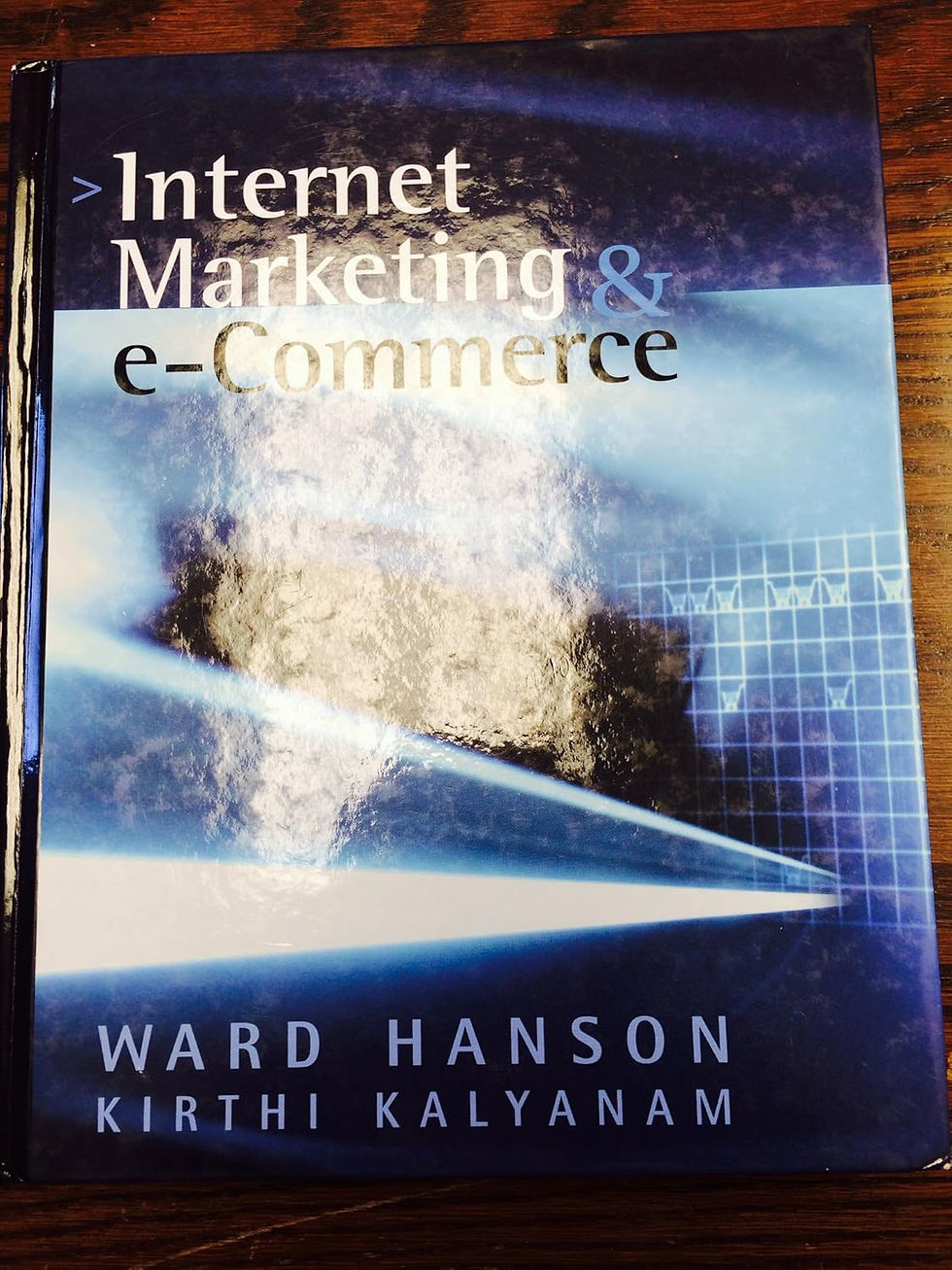
Internet Marketing & eCommerce
Authors: Ward Hanson and Kirthi Kalyanam
Short review
Internet Marketing & eCommerce provides a thorough introduction to how the internet has changed marketing, commerce, and business development. The book combines theory and practical examples in digital marketing, e-commerce, customer behavior, value creation, and digital business models. Although written at a time when the internet was still in its infancy, many of the fundamental principles are still highly relevant.
Why we recommend the book
This book was an important part of my own learning journey in digital marketing and e-commerce. It helped build my understanding of how technology, customer experiences and business strategy are interconnected – an insight that later became very important in my work with SAS, the Norwegian Opera & Ballet, Bærum Municipality and eventually the project The Invisible Capital. Many of the ideas about customer value, digitalization and innovation presented on the website have their roots in the knowledge this book conveys.

The Innovator's Solution: Creating and Sustaining Successful Growth
Authors: Clayton M. Christensen and Michael E. Raynor
Short review
In this sequel to The Innovator's Dilemma, Clayton Christensen shows how businesses can translate innovation theory into practical strategy. The book explains how companies can identify new growth opportunities, develop disruptive innovations, and build organizations that thrive in rapidly changing markets.
Why we recommend the book
While The Innovator's Dilemma explains why established businesses are often challenged, The Innovator's Solution provides concrete advice on how to meet the challenges. The book is therefore a natural next step for anyone who wants to understand innovation, strategy and long-term value creation.

The Innovator's DNA: Mastering the Five Skills of Disruptive Innovators
Authors: Jeff Dyer, Hal Gregersen and Clayton M. Christensen
Short review
What characterizes people who create groundbreaking innovations? The authors identify five key skills – observation, questioning, experimentation, networking and association – that are common to the world's most innovative leaders and entrepreneurs.
Why we recommend the book
This book shifts the focus from organizations to the people behind innovation. It shows that creativity and innovation can be developed through deliberate training and experience. The perspectives align well with the philosophy behind Invisible Capital, where human competence and curiosity are the most important drivers of development.

Competing Against Luck: The Story of Innovation and Customer Choice
Authors: Clayton M. Christensen, Taddy Hall, Karen Dillon and David S. Duncan
Short review
In this book, Clayton Christensen further develops the theory of Jobs to Be Done – the idea that customers do not primarily buy products, but "hire" them to solve specific needs. Through practical examples, the authors show how businesses can develop products and services that address customers' real-world challenges.
Why we recommend the book
For anyone working in customer experience, service design, and innovation, this is one of the most insightful books ever written. It reminds us that value creation always starts with understanding the people we are developing solutions for – a fundamental principle of Invisible Capital.

The Innovator's Dilemma: When New Technologies Cause Great Firms to Fail
Author: Clayton M. Christensen
Short review
The Innovator's Dilemma is considered one of the most influential books on innovation and technological change. Clayton M. Christensen introduces the theory of disruptive innovation and explains why even the most successful businesses can fail when new technologies and business models challenge established markets. Through a series of examples, he shows how companies often focus on today's customers and incremental improvements, while overlooking innovations that later change entire industries.
Why we recommend the book
This is one of the books that has had the greatest impact on modern innovation thinking. When I first read it, it gave me a whole new perspective on why some businesses succeed in transformation, while others lag behind – even when they are well led. The insight has been an important part of my own understanding of digitalization, innovation and change management, and many of the reflections in The Invisible Capital build on the ideas Clayton Christensen presents in this classic. The book is as relevant today, in the face of artificial intelligence and digital transformation, as it was when it was published.

Open Innovation: The New Imperative for Creating and Profiting from Technology
Author: Henry Chesbrough
Short review
Henry Chesbrough introduced the concept of Open Innovation and changed the way many businesses think about research and development. He shows how companies can create more innovation through collaboration with customers, universities, start-ups, suppliers and other external partners.
Why we recommend the book
Open Innovation has had a major influence on modern innovation thinking and was also an important topic during the seminars in Oxford and San Francisco. The book shows why future value creation occurs in the interaction between people, businesses and knowledge environments – not within closed organizations alone.

Blue Ocean Strategy: How to Create Uncontested Market Space and Make the Competition Irrelevant
Authors: W. Chan Kim and Renée Mauborgne
Short review
Blue Ocean Strategy challenges businesses to shift their focus away from fierce competition and instead create new markets with little or no competition. The authors present strategies and models that help organizations develop innovative products, services, and business models.
Why we recommend the book
This book has inspired leaders around the world to rethink strategy and innovation. Instead of competing for the same customers, it shows how businesses can create new value through creativity and differentiation. The perspectives align very well with the themes of innovation, digitalization, and long-term value creation in Invisible Capital.

Outside Innovation: How Your Customers Will Co-Design Your Company's Future
Authors: Patricia B. Seybold
Short review
Patricia Seybold shows how businesses can create better products and services by actively involving customers in the innovation process. The book describes how dialogue, co-creation and close collaboration with users can provide better solutions and stronger competitiveness.
Why we recommend the book
Customers often hold the most important insights into how products and services can be improved. This book emphasizes the importance of listening, involving, and learning from users – a perspective that is echoed in many of the articles on The Invisible Capital. Innovation rarely happens alone; it is created in the interaction between people.

Blown to Bits: How the New Economics of Information Transforms Strategy
Authors: Philip Evans and Thomas S. Wurster
Short review
This book analyzes how digital information is changing competitive conditions, markets, and business strategies. The authors explain how the internet is disrupting established structures and creating new opportunities for businesses that are able to think differently.
Why we recommend the book
Although written early in the internet revolution, the book describes many of the developments that still characterize business today. It provides valuable perspective on how digitalization affects value chains, competition, and innovation – themes that are central to Invisible Capital.

Wikinomics: How Mass Collaboration Changes Everything
Authors: Don Tapscott and Anthony D. Williams
Short review
Wikinomics shows how openness, sharing and collaboration across organizations create new forms of innovation and value creation. Through a number of international examples, the authors describe how digital networks make it possible to develop products, services and knowledge together.
Why we recommend the book
This book was groundbreaking when it was first published, and many of the ideas have since become a natural part of everyday digital life. The perspectives on collaboration, knowledge sharing, and open innovation processes align very well with the philosophy behind Invisible Capital, where people and networks are at the center of value creation.

© 2025 - 2026 Portico Publish | The invisible capital Privacy and use of the website | Developed and operated by Magne Bjella | Powered and secured by Wix


Comments