
Motorhomes, caravans and campsites in Norway – statistics, development and values

When vacation becomes a lifestyle
While some Norwegians travel to their cabins in the mountains or by the sea, others choose to take their home on wheels with them. Motorhomes and caravans have become an important part of Norwegian holiday and leisure life for decades. For many, the campsite has become a permanent gathering place for much of the year – almost like an extra holiday home. At the same time, motorhomes, caravans and campsites represent significant private investments and create great value for families, local communities and Norwegian tourism.
Published: Status Norway

Freedom on four wheels
Camping life is about much more than just a vacation. All around Norway there are campsites where families return year after year. Children grow up with the same neighbors every summer, new friendships are formed, and many develop a strong relationship with the place they visit. For some, the campsite becomes almost a small local community.
While the holiday home is tied to one specific address, the motorhome gives the freedom to experience all of Norway – and the rest of Europe. The caravan often represents something else: a permanent vacation spot where the family returns year after year. Both are about the same thing – the desire for nature experiences, community, freedom and quality of life.

Camping is part of the Norwegian folk spirit
Norwegians have a long tradition of using nature. Some choose a mountain cabin, others a seaside cabin, while more and more people want the freedom that comes with a motorhome or caravan. For many families, the summer holiday starts when the car is connected to the caravan or the motorhome is put into gear. Others have permanent seasonal pitches where the caravan is parked for much of the year. There, neighbors meet, children make new friends, and many return to the same people and surroundings year after year.
The campsite thus becomes much more than a place to spend the night. For many, it becomes a small local community.
Registered motorhomes and caravans in Norway
By the end of 2025, over 178,000 motorhomes and caravans were registered in Norway.
Category | Registered population |
Motorhomes | 51,425 |
Caravans | 126,668 |
Total | 178,093 |
The figures show that many Norwegian families have invested in a form of vacation that combines mobility, nature experiences and community. Each motorhome and caravan represents not only a vehicle, but also a place where families spend vacations, long weekends and summer weeks together.

Campsites across the country
Category | Scope |
Campsites | 905 |
Commercial guest nights (2025) | Over 8.4 million |
The campsites – Norway's small holiday towns
Campsites are found from Lindesnes in the south to Finnmark in the north and are an important part of Norwegian tourism. Many are located by the sea, lakes or mountains, and they contribute to activity far beyond the largest tourist towns.
Campsites are an important part of history. Around the country there are hundreds of campsites that welcome millions of overnight stays each year. Many offer seasonal sites where caravans stay for much of the year, while others serve as natural stopping points for motorhome tourists traveling through Norway.

Campsites create jobs, provide income for local shops, restaurants, craftsmen and activity companies, and contribute to vibrant local communities far outside the largest cities. They are therefore not only a part of tourism – they are also a part of Norwegian value creation.
Large private assets
Motorhomes and caravans represent significant private investments. Many new motorhomes cost between one and two million kroner, while caravans vary from simple models to large family and all-season caravans with a high standard.
Based on registered stock and conservative estimates of average market value, the total values can be illustrated as follows:
Category | Stock | Estimated average value | Total value |
Motorhomes | 51,425 | about 900,000 | NOK 46.3 billion |
Caravans | 126,668 | about 275,000 | NOK 34.8 billion |
Total | 178,093 | approximately 81.1 billion NOK |
These are deliberately conservative estimates. The actual market value may be higher because many newer motorhomes and caravans have significantly higher than average values.

What do the statistics show?
The statistics tell us about far more than the number of vehicles.
It shows that many Norwegian families choose to invest in experiences, nature and leisure. Camping life is about the freedom to travel when you want, but also about security and belonging. Many caravans are never moved after they are put in place. They are on permanent seasonal sites with nail tents, terraces and outdoor areas, and in practice function as a holiday home.
Camping is therefore not just transport – it is a way of life.

Value creation throughout Norway
Camping life also creates major ripple effects.
When a family visits a campsite, money is spent on groceries, restaurants, fuel, activities, maintenance, boat rentals, fishing equipment, and local attractions. Many campsites work closely with local businesses, and they contribute to jobs and value creation in the rural areas.
At the same time, motorhomes and caravans are products that are purchased, maintained, insured and repaired through a large network of Norwegian businesses.

In short
Over 51,000 motorhomes are registered in Norway.
Nearly 127,000 caravans are registered.
Norway has around 905 campsites.
The campsites had over 8.4 million guest nights in 2025.
Motorhomes and caravans represent a total private value of approximately NOK 81 billion.
Camping creates significant value for Norwegian tourism and local businesses.
Status Norway 🇳🇴
When we add up passenger cars, holiday homes, leisure boats, motorcycles, motorhomes and caravans, we see a clear pattern. Norwegian households have built up significant private assets over generations. At the same time, the statistics show something that is at least as important: how these assets are used.
Some invest in a cabin by the sea. Others choose a motorhome that takes them from North Cape to Lindesnes. Some have a caravan that stays in the same spot year after year. What they all have in common is that the investments are about more than finances. They are about freedom, nature, family, community and quality of life.
This is precisely what Status Norway wants to show. Behind the numbers we find the stories of how Norwegians live, what they prioritize and what values have been built up through work, savings and long-term value creation. The numbers do not just describe vehicles and property – they describe a society with great private values, strong traditions and opportunities to create good lives across the country.

The knowledge behind The Invisible Capital
Invisible Capital is not built on one book or one idea. It has been developed through many years of study, research, international seminars, and practical experience from working life.
The books below represent some of the most important professional sources of inspiration behind the project. They have shaped the way I think about leadership, innovation, digitalization, customer experiences, value creation and – not least – the importance of the people who create the values.
Each book has contributed new perspectives. Together, they have helped develop the knowledge base for The Invisible Capital and the book project Value-Creating People.
I hope they can give you the same professional inspiration that they have given me.
Recommended books from our library

Content Strategy for the Web (2nd Edition)
Author/authors: Kristina Halvorson and Melissa Rach
Short review
How do you create content that actually helps people – and at the same time supports your business goals? Content Strategy for the Web is considered one of the most influential books in the field of content strategy and digital communications. The book shows how good content does not arise by chance, but through a deliberate strategy where user needs, the organization's goals, structure, work processes and management are closely linked.
The authors take the reader through the entire process – from planning and organizing to publishing, managing and continuously improving content on websites and digital services. Although technology has evolved since the book was published, the principles of quality, relevance, management and long-term content work are at least as relevant in an era where search engines and artificial intelligence assess the credibility and usefulness of content.
Why we recommend the book
At The Invisible Capital, we believe that good content is one of the most important forms of invisible value creation. A website is far more than design and technology – it is the content that builds trust, creates great customer experiences and helps people find the answers they are looking for.
This book is perfect for leaders, communications consultants, content producers, web editors, UX designers, and anyone working with digital services. It shows why a clear content strategy leads to better user experiences, more effective interactions, and stronger digital results over time.
In an era where artificial intelligence is increasingly important in how information is discovered, understood, and communicated, this book is more relevant than ever. It reminds us that technology alone never creates value – it is good, structured, and relevant content that makes the difference.

Don't Make Me ThinkAuthor: Steve Krug
Short review
Don't Make Me Think is one of the world's most influential books on usability and web design. Since its first edition in 2000, the book has helped designers, developers, content producers, and managers understand a simple but powerful principle: Good digital services should be intuitive. The user should be able to complete their task without having to stop and think about how the website works.
Why we recommend the book
This is one of the books that has had the greatest impact on my own work with digital services. Over the years – from SAS and the Norwegian Opera & Ballet to working on Bærum Municipality’s website – the principles in this book have been an important reminder that technology is never an end in itself. The goal is to make everyday life easier for the people who use the services. Despite the fact that the book was published many years ago, the message is just as relevant today.
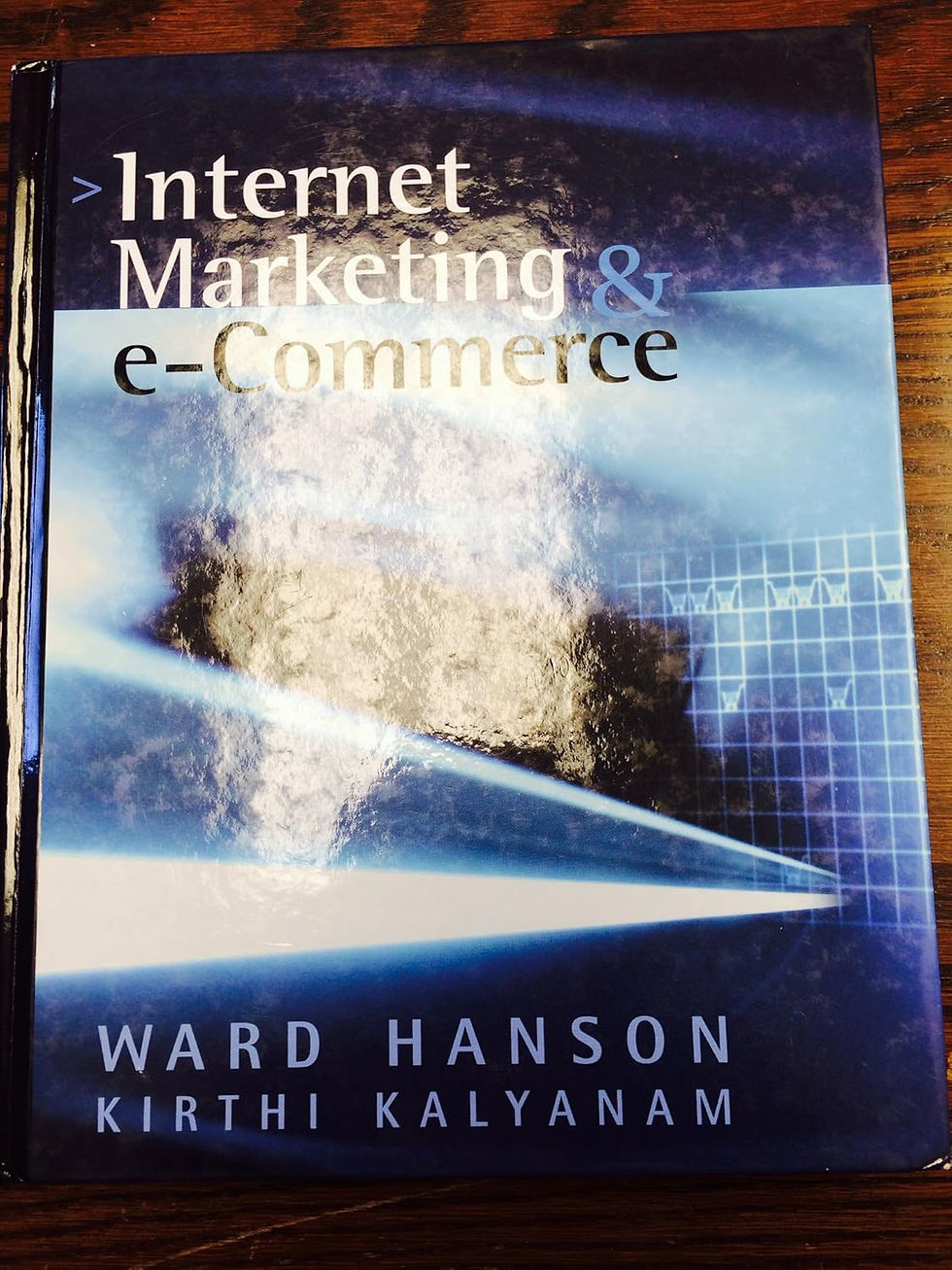
Internet Marketing & eCommerce
Authors: Ward Hanson and Kirthi Kalyanam
Short review
Internet Marketing & eCommerce provides a thorough introduction to how the internet has changed marketing, commerce, and business development. The book combines theory and practical examples in digital marketing, e-commerce, customer behavior, value creation, and digital business models. Although written at a time when the internet was still in its infancy, many of the fundamental principles are still highly relevant.
Why we recommend the book
This book was an important part of my own learning journey in digital marketing and e-commerce. It helped build my understanding of how technology, customer experience and business strategy are interconnected – an insight that later became very important in my work with SAS, the Norwegian Opera & Ballet, Bærum Municipality and eventually the project The Invisible Capital. Many of the ideas about customer value, digitalisation and innovation presented on the website have their roots in the knowledge this book conveys.

The Innovator's Dilemma: When New
Technologies Cause Great Firms to Fail
Author: Clayton M. Christensen
Short review
The Innovator's Dilemma is one of the most influential books on innovation and technological change. Clayton Christensen introduces the concept of "disruptive innovation" and shows how even the most successful businesses can fail when new technologies and business models change the market. Through a series of examples, he explains why established companies often have difficulty adapting to radical change - even when they do "everything right."
Why we recommend the book
This book has had a major impact on how I view innovation, digitalization, and change management. It provided a new perspective on why established businesses are challenged by new players, and why the ability to think differently is crucial in a world characterized by continuous technological development. Many of the reflections in The Invisible Capital on innovation, digital transformation, and value creation are based on the insights Clayton Christensen conveys in this classic.

© 2025 - 2026 Portico Publish | The invisible capital Privacy and use of the website | Developed and operated by Magne Bjella | Powered and secured by Wix


Comments