
San Francisco Seminar 2009 – Day 4
Macy’s, Saks, and Emotional Brand Building in a Time of Crisis

Introduction and Context
On Day 4, the seminar moved into one of the most complex topics in retail history:
How does a major department store chain navigate an economic crisis—and what happens when online and physical stores pull in different directions?
Macy’s and Saks represented two different strategic paths:
-
Saks: deep cost cuts, workforce reductions, postponed investments, and a focus on survival
-
Macy’s: investment in digital growth, emotional brand building, and local adaptation
The documentation you uploaded illustrates this very clearly. Saks’ dramatic measures—a 9% reduction in its workforce, capital expenditures cut in half, suspension of pension accruals, and a salary freeze—are described directly in the BNET article Saks, Macy’s Make Cuts at Store…
Macy’s, by contrast, reported 15.5% growth in online sales in January, 24% growth in Q4, and 29% growth for the full year 2008, according to its official press release:
Macy’s, Inc. Press Release
-
Where Saks cut back, Macy’s invested.
-
Where Saks talked about survival, Macy’s talked about identity, hope, and community.
Day 4 therefore left a powerful impression:
Digitalization is not technology—it is strategy under pressure.
Program Overview
The seminar day was structured around four main components:
-
The macroeconomic picture:
-
How the financial crisis affected U.S. department stores. The BNET article documents declining demand for luxury goods and shopping malls facing the threat of bankruptcy.
-
Saks, Macy’s Make Cuts at Store…
-
-
Case 1 – Saks Fifth Avenue:
-
Drastic cost-cutting, downsizing, and defensive market decisions.
-
-
Case 2 – Macy’s:
-
The “My Macy’s” strategy + the national Believe campaign → a new approach to digital brand building.
-
-
Discussion:
-
What can Norwegian organizations learn from how two retail giants chose fundamentally different paths?
-
Key Academic Themes
A. The Psychology of Crisis and the Brand Value of Hope
The BNET articles are clear: customers were buying less, were more price-sensitive, and were willing to switch brands in search of better value. Saks, Macy’s Make Cuts at Store…
While Saks responded with cost-cutting, Macy’s responded with:
-
storytelling
-
community
-
emotional engagement
-
digital accessibility
This culminated in Macy’s Believe campaign—documented through the campaign page (promo and PDF).
Here, Macy’s combined a Christmas tradition, the children’s story “Yes, Virginia,” charitable giving, and technology in a way that was entirely new in 2008–2009.
B. Restructuring and Cultural Change
Macy’s official press release reveals something crucial: My Macy’s—a major restructuring that shifted greater responsibility to local markets—significantly strengthened sales in the pilot cities.
Macy’s discovered that:
-
customers shop locally
-
assortments must be adapted to local culture
-
digital communication can reinforce local relevance
This was a radical approach for a national department store chain.
C. Online Growth as a Strategic Lifeline
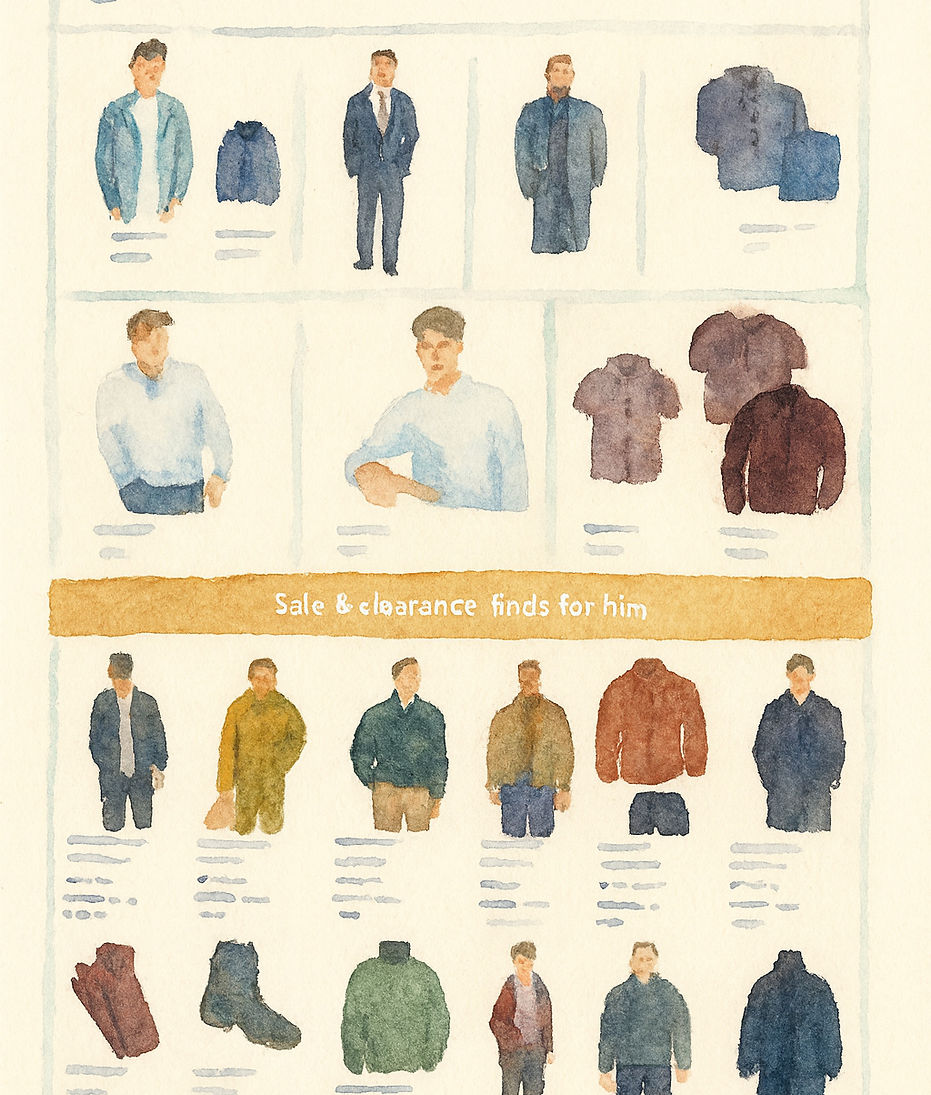
The figures from Macy’s—29% growth in online sales for the full year 2008—stand in sharp contrast to the decline in in-store sales. This is confirmed directly in the press release: “Online sales (macys.com and bloomingdales.com combined) were up 29% for the full year.”
Online sales became a lifeline.

Case Studies
Case: Macy’s “Believe” – Digital Emotional Brand Building
Two versions of the campaign page online
Both featured:
-
interactive Christmas ornaments
-
the “Believe Meter”
-
links to Santa’s Post Office
-
the Make-A-Wish connection
-
a strong visual presentation of “belief” and magic
Believe was not just a campaign. It was a cultural event.
It was a digital space where people could:
-
write letters
-
share stories
-
express hope
-
participate in something bigger
At a time when people were afraid of the future, Macy’s created a space for optimism.
Case: Saks – A Luxury Brand in an Economic Storm
The BNET article documents a company in crisis:
-
the luxury customer disappeared
-
the cost base was too high
-
the company was forced to take drastic measures
-
investments were halted
-
even 401(k) matching was eliminated
Saks, Macy’s Make Cuts at Store…
While Macy’s invested in digital development and emotional capital, Saks attempted to “cut its way to health.”
Reflections and Discussion:
Based on the documents, the group discussed:
-
Why do some companies succeed in times of crisis while others fail?
-
Why do some brands use storytelling while others rely on discounts?
-
How can technology carry a traditional brand through a financial crisis?
-
How do you build emotional relevance digitally?
-
Can Norwegian companies do the same—and should they?
The main conclusion was clear: Macy’s won through vision, not cost-cutting.
International Perspectives
-
United States: Emotional brand building as part of national identity.
-
Europe: More product- and price-oriented communication, with less emphasis on storytelling.
-
Nordic countries: High levels of trust, but less tradition of emotional marketing.

What Do We Take Home?
-
Stories create lasting value—numbers alone do not.
-
Emotional campaigns can unite national and local levels.
-
Online and physical stores must be viewed as one ecosystem.
-
Values must be activated, not merely communicated.
-
Corporate social responsibility creates authenticity when it is integrated naturally.
Relevance Today
More than 15 years later, Macy’s Believe still stands as a textbook example of emotional digital brand building. The principles—connecting technology, community, and meaning—remain just as relevant today for the public sector, tourism, and education. Macy’s understood early on that human belief and digital action are not opposites, but can reinforce each other.
Peder Inge Furseth
Peder Inge Furseth was a key academic driving force behind the San Francisco seminars and played an important role in making the encounter with Silicon Valley relevant to Norwegian and European organizations. Through his role as a professor at BI Norwegian Business School and as academic director of the program, he helped participants place the presentations within a broader context—one in which technology, innovation, business development, and people had to be understood together.
In San Francisco, participants met entrepreneurs, researchers, technology leaders, and investors from some of the world’s most innovative environments. Furseth’s strength was his ability to connect these experiences with practical challenges and opportunities facing Norwegian organizations. He helped translate Silicon Valley’s ideas and ways of working into a
Nordic context where collaboration, trust, and long-term value creation play a central role.
Throughout the seminar series, he served as an important bridge between research, business, and technology. For many participants, he therefore became more than an academic leader—he was also a mentor who inspired them to think differently about innovation, digitalization, and commercialization.
Learn more about Peder Inge Furseth here
From Studies and Seminars to Today’s Knowledge Hub
The studies, seminars, and academic trips documented on this page form part of the knowledge base behind The Invisible Capital. Topics such as customers, technology, innovation, digitalization, and value creation have been part of this journey for several decades — while these fields have continued to evolve.
At The Invisible Capital, we continue exploring these questions through dedicated knowledge series. Here, earlier theory, research, and experience are connected with newer knowledge, emerging technologies, and today’s challenges facing people and organizations.
Innovation
Innovation is not just about new ideas. Value is created when knowledge, technology, and ideas are developed into products, services, processes, organizational forms, and business models that are actually put into use. The series on innovation traces the field from Schumpeter to modern innovation research and explores incremental, radical, disruptive, open, and user-driven innovation.
→ Explore the Innovation series
The Customer
The customer is not simply the recipient of what an organization produces. In a competitive market, the customer is a decisive factor in whether an organization actually succeeds in creating value. The series on the customer explores customer orientation, customer insight, customer experience, satisfaction, loyalty, trust, and the human interactions that shape the customer relationship.
→ Explore the Customer series
Value Creation
What does it really mean to create value — and who creates it? The Value Creation series moves from economic theory and influential thinkers to a broader understanding of how people, knowledge and skills, institutions, organizations, and the public sector contribute to value creation.
→ Explore the Value Creation series
Digitalization
Digitalization has evolved from individual technologies into a fundamental part of how organizations operate and create value. The Digitalization from A to Z series traces this evolution through the internet, the web, e-commerce, search, UX, social media, mobile, omnichannel, cloud, data, platforms, and digital transformation — leading up to today’s AI-first era.
→ Explore the Digitalization from A to Z series
Artificial Intelligence
Artificial intelligence represents the next chapter in the digital evolution. In our dedicated AI knowledge hub, we explore how artificial intelligence works, how AI finds and uses information, how it evaluates sources and websites, and what this development could mean for people, organizations, and value creation.
→ Explore the articles on Artificial Intelligence
Recommended Reading

Good Strategy Bad Strategy
Richard P. Rumelt explains why successful organizations create competitive advantage through clear priorities, long-term thinking, and the ability to confront challenges directly. The book shows how strategy is about choices, direction, and understanding the market—especially during periods of significant change and economic pressure.


