
The hospital where people create value – every single day

"A hospital is much more than a building. It is a place where people, knowledge and care meet – every single day. Yes. Every day, tens of thousands of people go to work at Norwegian hospitals. Doctors, nurses, health professionals, bioengineers, radiographers, physiotherapists, porters, cleaners, technicians, ICT employees, kitchen staff, administration, researchers and many more. Together they constitute one of Norway's most important forms of human capital."

The doctor's consultation
It's a little after seven on a regular Tuesday morning.
The night shift is coming to an end. The day shift is coming in. Coffee cups are being filled. Computer screens are being turned on. Uniforms are being straightened out.
A surgeon goes through the day's operating program.
An anesthesia nurse checks the equipment one more time.
A bioengineer starts the first analyses of the day.
A porter picks up the first patient of the day.
In the maternity ward, a newborn baby takes its very first breath.
In the intensive care unit, another person is fighting for their neighbor.
In the cancer ward, someone is anxiously waiting for test results.
The team is ready in the emergency room.
This is how the day begins.
Not just in one hospital.
But in hospitals all over Norway.
Every single day.
When we discuss hospitals in the public debate, it is often about finances.
How much do they cost?
How long are the waiting lists?
How many beds are there?
How many billions are being invested in new buildings?
These are important questions.
But they only tell a small part of the story.
Because a hospital is not primarily a building.
A hospital is people.

Some numbers that tell a bigger story
Numbers can seem cold.
But behind every number there is a person.
Behind every person there is a story.
And behind every story there are people who create value.
There are now around 5.6 million people living in Norway.
During 2025, around 2.7 million people received treatment in somatic hospitals, while around 200,000 people received treatment in adult mental health care.
The specialist health service employed nearly 143,000 man-years at the same time.
This means that the healthcare system is one of Norway's largest knowledge-based workplaces.
Behind these man-years we find doctors.
Nurses.
Healthcare professionals.
Bioengineers.
Radiographers.
Psychologists.
Porters.
Cleaners.
Kitchen staff.
Technicians.
Physiotherapists.
Occupational therapists.
Administrative personnel.
Apprentices.
Students.
Leaders.
And many more.
Everyone has one thing in common.
They help other people have a better life.

During 2025, around 2.7 million people received treatment in somatic hospitals, while around 200,000 people received treatment in adult mental health care.
In the course of a single year, nearly 920,000 discharges from Norwegian hospitals are registered.
It is easy to read the number.
It is far more difficult to understand what it really means.
920,000 stories.
920,000 families.
920,000 lives that have been affected in one way or another.
Someone comes in scared.
Others come out healthy.
Someone gets the best news of their life.
Others get the hardest one.
But none of them encounter a spreadsheet.
They meet people.
That is precisely why this blog is about something other than health economics.
It is about the capital that is rarely mentioned.
The one that is not in the annual reports.
The one that cannot be bought.
The one who also cannot be replaced by artificial intelligence or robots.
It's about the people.
About the invisible capital.
In the course of a single year, nearly 920,000 discharges from Norwegian hospitals are registered.

The laboratory
Research, statistics and documentation
When we take a blood test, it is not because we are concerned with the test itself.
We want answers.
The same is true with statistics.
The numbers are not the goal.
They help us understand reality.
And the reality is quite impressive.
Every single day, thousands of surgeries, examinations, X-rays, laboratory analyses and outpatient consultations are performed at Norwegian hospitals.
For the patient, it is one event.
For the hospital, it is the result of an enormous interaction between people.

Hospitals are among Norway's largest knowledge environments
When many people think of knowledge companies, they may imagine technology companies.
Large IT companies.
Research environments.
Innovation centers.
But few workplaces in Norway gather more expertise than hospitals.
People with education and experience in hundreds of fields work here.
Someone is doing research.
Others teach.
Some are developing new treatment methods.
Others make sure the technology works.
Many work directly with patients.
Others work behind the scenes.
All are necessary.
Research saves tomorrow's patients
A hospital doesn't just treat today's patients.
It also works for those who get sick tomorrow.
New medicines are developed through research.
New surgical methods.
Better diagnostics.
More gentle treatments.
Knowledge is shared between hospitals in Norway and with research environments all over the world.
Every single research article.
Every Ph.D.
Every clinical trial.
Could mean the difference between life and death for future patients.
It is an investment that rarely appears in a financial statement.
But which creates enormous value.
Hospitals also educate the healthcare personnel of the future
Many people think of hospitals as places where people receive treatment.
That's right.
But hospitals are also large educational institutions.
Every year, thousands of medical students, nursing students, physiotherapy students, bioengineering students and many others receive their most important practical training here.
Knowledge is passed on from one generation to the next.
Not through textbooks alone.
But through people.
Through experience.
Through guidance.
Through trust.
Value creation that cannot be fully measured

When a new treatment method allows patients to return home faster...
... saves society money.
When a patient recovers enough to return to work...
... new values are created.
When hip surgery allows a person to walk without pain again......the quality of life increases.
When a cancer patient gets more years to live...
...no one can calculate the real value.
This is value creation.
Not just for the patient.
But for the family.
The workplace.
The local community.
And all of Norway.
The invisible capital
The more we study the hospitals, the clearer one thing becomes.
The machines are impressive.
The buildings are impressive.
The technology is impressive.
But none of them create value alone.
That's what humans do.
Therefore, the most important capital in a hospital is not the machines.
It doesn't sit in the walls.
It is not in balance.
It goes to work.
Every single day.

Research saves tomorrow's patients
A hospital doesn't just treat today's patients.
It also works for those who get sick tomorrow.
New medicines are developed through research.
New surgical methods.
Better diagnostics.
More gentle treatments.
Knowledge is shared between hospitals in Norway and with research environments all over the world.
Every single research article.
Every Ph.D.
Every clinical trial.
Could mean the difference between life and death for future patients.
It is an investment that rarely appears in a financial statement.
But which creates enormous value.
Every single day, thousands of surgeries, examinations, X-rays, laboratory analyses and outpatient consultations are performed at Norwegian hospitals.

Hospitals also educate the healthcare personnel of the future
Many people think of hospitals as places where people receive treatment.
That's right.
But hospitals are also large educational institutions.
Every year, thousands of medical students, nursing students, physiotherapy students, bioengineering students and many others receive their most important practical training here.
Knowledge is passed on from one generation to the next.
Not through textbooks alone.
But through people.
Through experience.
Through guidance.
Through trust.

There are now around 5.6 million people living in Norway.
During 2025, around 2.7 million people received treatment in somatic hospitals, while around 200,000 people received treatment in adult mental health care.
Value creation that cannot be fully measured
When a new treatment method allows patients to return home faster...
... saves society money.
When a patient recovers enough to return to work...
... new values are created.
When a hip operation allows a person to walk without pain again...
... increases the quality of life.
When a cancer patient gets more years to live...
...no one can calculate the real value.
This is value creation.
Not just for the patient.
But for the family.
The workplace.
The local community.
And all of Norway.

The invisible capital
The more we study the hospitals, the clearer one thing becomes.
The machines are impressive.
The buildings are impressive.
The technology is impressive.
But none of them create value alone.
That's what humans do.
Therefore, the most important capital in a hospital is not the machines.
It doesn't sit in the walls.
It is not in balance.
It goes to work.
Every single day.

The X-ray
What are the numbers hiding? Look behind the headlines.
An X-ray shows us something the eye cannot see.
The same applies to hospitals.
We see the buildings.
We see the ambulances.
We see the white coats.
We see the advanced surgical robots.
We see the MRI machines.
We see the helicopters landing on the roof.
All this is visible.
But we don't see the most important thing.
We don't see the experienced nurse who detects a small change in the patient's breathing several minutes before the alarm goes off.
We don't see the bioengineer who finds the one blood value that causes the treatment to change in time.
We don't see the radiographer who detects a small shadow on an image.
We don't see the porter who greets the patient with a smile on the way to an operation.
We don't see the cleaner who prevents infections through work most of us never notice.
We don't see the technician who makes sure the respirator works exactly when it's needed.
We don't see the secretary who makes the entire patient process come together.

Yet all are crucial.
When an operation is successful, it's easy to give the surgeon credit.
The surgeon deserves great respect.
But the operation began long before the surgeon picked up the scalpel.
It began when the patient was examined.
When the samples were analyzed.
When the pictures were taken.
When the operating room was prepared.
When the instruments were sterilized.
When the equipment was checked.
When the anesthesia team planned the procedure.
When the porter picked up the patient.
When the cleaner cleaned the room.
The values were created by a team.

Not by one person.
The same applies when a child is born.
The parents may meet the midwife first.
But behind her stands a whole system of people.
Obstetricians.
Childminders.
Anesthesia team.
Operations team.
Bioengineers.
Laboratories.
Technicians.

Cleaners.
Kitchen staff.
Administration.
Everyone contributes.

No one stands alone.
It's easy to believe that technology is the most important reason why healthcare is constantly improving.
The technology is amazing.
But technology is a tool.
It is the people who give it value.

An MRI machine alone does not make a diagnosis.
A surgical robot saves no one without humans.
A laboratory does not interpret test results without professionals.
Artificial intelligence can analyze enormous amounts of data.
But it can't hold a hand.
It cannot give hope.
It cannot meet a human's gaze when life suddenly becomes uncertain.
Perhaps this is precisely the greatest value of Norwegian hospitals.
Not the buildings.
Not the machines.
Not the budgets.
But the culture.
The culture where people with different skills work towards the same goal.
To help another person.
It is this culture that is the invisible capital.
It cannot be purchased.
It cannot be imported.
It is built through knowledge.
Experience.
Trust.
Respect.
And thousands of meetings between people – every single day.
When we look behind the headlines, we see something other than a hospital.
We see one of Norway's greatest examples of value creation through people.
And perhaps that is precisely why hospitals are among our most important social institutions.
In the course of a single year, nearly 920,000 discharges from Norwegian hospitals are registered.

Heartbeat
The human reflection
Most of us hope that we will not have to be hospitalized.
But almost all of us get there at some point.
Maybe as a patient.
Maybe as relatives.
Perhaps to welcome a new family member into the world.
Maybe to say goodbye to someone we love.
Hospitals accompany us throughout our lives.
From our very first breath.
To some of our last moments.
When we think back to a hospital stay, we rarely remember the color of the walls.
We don't remember what model the hospital bed was.
We don't remember the name of the CT machine.
We also don't remember which computer system the hospital used.
What we remember are the people.

The nurse who sat down for a few extra minutes.
The doctor who explained with calmness and respect.
The porter who made us smile when we were scared.
The cleaner who wished us a speedy recovery.
The physiotherapist who cheered with us when we managed to take our first steps.
It's moments like these that stay.
We live in a time where artificial intelligence is developing faster than ever.
Computers can analyze millions of X-ray images.
Robots can assist during complicated operations.
Digital solutions are making healthcare increasingly better.
All of this is wonderful.
But one thing hasn't changed.
When a person is afraid.
When a person is in pain.
When a person receives a serious message.
Then there is still another person we are looking towards.

A glance.
One voice.
One hand.
A little smile.
No technology can replace that.
I think that's why hospitals mean so much to us.
Not just because they treat illness.
But because they remind us of something fundamental.
We humans need each other.
No one gets through life alone.
We live off each other's work.
We live off each other's knowledge.
We live by caring for each other.
Every single day.
When we talk about value creation, many people first think of companies.
In factories.
On technology.
On export.
On economic growth.
All of this is important.
But what is the value of a child who gets to grow up because the treatment is successful?
What is the value of a mother recovering enough to return home to her family?
What is the value of a grandfather who gets more good years with his grandchildren?
What is the value of a person regaining hope?
Some values cannot be measured in kroner.
Yet they are perhaps the greatest values a society can create.
Perhaps that is precisely why hospitals tell us something important about Norway.
We invest in buildings.
We invest in research.
We invest in technology.
But the most important investment we make is in people.
In knowledge.
In collaboration.
In trust.
In care.

This is the invisible capital.
And it is this capital that allows people to go home from the hospital with something they might have thought they had lost.
Hope.
And sometimes life itself.
"We live off each other's work. We live off each other's knowledge. We live off each other's care."
Epicrisis
Summary and the way forward
A hospital is full of technology.
Advanced equipment.
Modern buildings.
Computers.
Laboratories.
Operating rooms.
All of this is necessary.
But none of them create value on their own.
Values only arise when people use their knowledge together.
When the doctor and nurse collaborate.
When the bioengineer delivers the test results.
When the radiographer takes the images.
When the porter safely accompanies the patient through the hospital.
When the cleaner provides a safe treatment environment.
When the physiotherapist helps the patient out of bed.

When the kitchen staff prepares a meal for someone who has finally regained their appetite.
When hundreds of people each do a little.
Then something remarkable happens.
Then a hospital becomes more than a building.
It becomes a community.
Throughout this blog we have looked at numbers.
We have looked at research.
We've looked behind the headlines.
But perhaps the most important insight is this:
The most important capital at a hospital is not on the balance sheet.
It is not included in the annual accounts.
It cannot be purchased on an international market.
It is built over time.
Through education.
Experience.
Cooperation.
Trust.

Care.
And a shared desire to help other people.
Maybe we should therefore talk a little differently about hospitals.
Of course we will discuss the economy.
Of course, we must set quality standards.
Of course, we will develop new technology.
But we must never forget what makes all of this possible.
The people.
Because without them, a hospital is just a building.
With them, it becomes a place where lives are saved, hope is created and the future is built.
This blog is part of The Invisible Capital.
A project that wants to highlight the people behind value creation.
Not because buildings and technology are unimportant.
But because they can never replace the most important thing we have.
Each other.
Thank you very much
To all of you who work at Norwegian hospitals.
To those of you who meet patients when they are at their most vulnerable.
For those of you who work at night, on weekends and on public holidays.
For those of you who research, teach, treat, comfort, wash, cook, repair equipment, analyze samples, organize, plan and collaborate.
To those of you who often make a difference without anyone noticing.
Thanks.
Not just for what you do.
But for who you are.
You don't just create healthcare services.
You create security.
You create hope.
You create quality of life.
You create the future.
You remind us that the greatest values in a society are never created by buildings alone.
They are created by humans.
Every single day.
This is The Invisible Capital.
These are Value-Creating People.
➜ Read more about the hospitals: Behind every patient meeting are thousands of people
Read more about value-creating people
Value creation happens every day and throughout society. In this series, we take a closer look at some of the people, workplaces, and societal functions that create value for us all.
Further reading:
The invisible capital in Norwegian working life We often talk about technology, strategy, results and efficiency. Far less often about the people who make working life and value creation work – every single day.
When ideas stop with the leaders . Why good ideas are rarely lacking – and what it takes for them to actually be realized.
Norway has never had more knowledge and value creation – how do we create more? Statistics Norway's figures show that Norwegians have never had a higher level of education. Yet it is not the number of credits that determines whether we succeed as a society. What is crucial is how we convert knowledge into innovation, jobs and value creation.
Why digitalization is really about people - We often talk about digitalization as if it is primarily about technology. About systems, platforms, artificial intelligence, automation and new digital services. Many of the biggest headlines are about investments, results and technological breakthroughs.
Recommended books from our library

Don't Make Me ThinkAuthor: Steve Krug
Short review
Don't Make Me Think is one of the world's most influential books on usability and web design. Since its first edition in 2000, the book has helped designers, developers, content producers, and managers understand a simple but powerful principle: Good digital services should be intuitive. The user should be able to complete their task without having to stop and think about how the website works.
Why we recommend the book
This is one of the books that has had the greatest impact on my own work with digital services. Over the years – from SAS and the Norwegian Opera & Ballet to working on Bærum Municipality’s website – the principles in this book have been an important reminder that technology is never an end in itself. The goal is to make everyday life easier for the people who use the services. Despite the fact that the book was published many years ago, the message is just as relevant today.
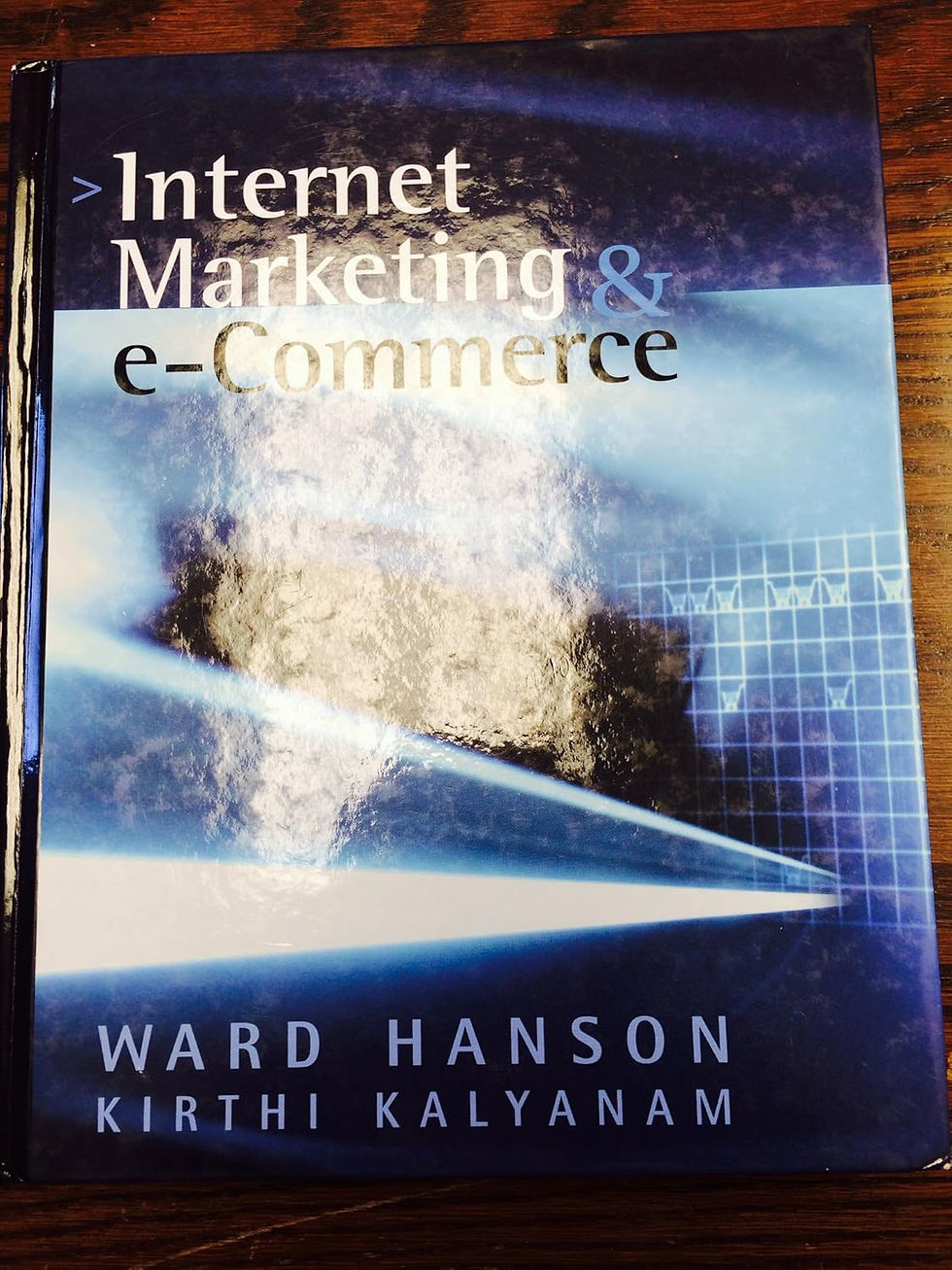
Internet Marketing & eCommerce
Authors: Ward Hanson and Kirthi Kalyanam
Short review
Internet Marketing & eCommerce provides a thorough introduction to how the internet has changed marketing, commerce, and business development. The book combines theory and practical examples in digital marketing, e-commerce, customer behavior, value creation, and digital business models. Although written at a time when the internet was still in its infancy, many of the fundamental principles are still highly relevant.
Why we recommend the book
This book was an important part of my own learning journey in digital marketing and e-commerce. It helped build my understanding of how technology, customer experiences and business strategy are interconnected – an insight that later became very important in my work with SAS, the Norwegian Opera & Ballet, Bærum Municipality and eventually the project The Invisible Capital. Many of the ideas about customer value, digitalization and innovation presented on the website have their roots in the knowledge this book conveys.

The Innovator's Solution: Creating and Sustaining Successful Growth
Authors: Clayton M. Christensen and Michael E. Raynor
Short review
In this sequel to The Innovator's Dilemma, Clayton Christensen shows how businesses can translate innovation theory into practical strategy. The book explains how companies can identify new growth opportunities, develop disruptive innovations, and build organizations that thrive in rapidly changing markets.
Why we recommend the book
While The Innovator's Dilemma explains why established businesses are often challenged, The Innovator's Solution provides concrete advice on how to meet the challenges. The book is therefore a natural next step for anyone who wants to understand innovation, strategy and long-term value creation.

The Innovator's DNA: Mastering the Five Skills of Disruptive Innovators
Authors: Jeff Dyer, Hal Gregersen and Clayton M. Christensen
Short review
What characterizes people who create groundbreaking innovations? The authors identify five key skills – observation, questioning, experimentation, networking and association – that are common to the world's most innovative leaders and entrepreneurs.
Why we recommend the book
This book shifts the focus from organizations to the people behind innovation. It shows that creativity and innovation can be developed through deliberate training and experience. The perspectives align well with the philosophy behind Invisible Capital, where human competence and curiosity are the most important drivers of development.

Competing Against Luck: The Story of Innovation and Customer Choice
Authors: Clayton M. Christensen, Taddy Hall, Karen Dillon and David S. Duncan
Short review
In this book, Clayton Christensen further develops the theory of Jobs to Be Done – the idea that customers do not primarily buy products, but "hire" them to solve specific needs. Through practical examples, the authors show how businesses can develop products and services that address customers' real-world challenges.
Why we recommend the book
For anyone working in customer experience, service design, and innovation, this is one of the most insightful books ever written. It reminds us that value creation always starts with understanding the people we are developing solutions for – a fundamental principle of Invisible Capital.

The Innovator's Dilemma: When New Technologies Cause Great Firms to Fail
Author: Clayton M. Christensen
Short review
The Innovator's Dilemma is considered one of the most influential books on innovation and technological change. Clayton M. Christensen introduces the theory of disruptive innovation and explains why even the most successful businesses can fail when new technologies and business models challenge established markets. Through a series of examples, he shows how companies often focus on today's customers and incremental improvements, while overlooking innovations that later change entire industries.
Why we recommend the book
This is one of the books that has had the greatest impact on modern innovation thinking. When I first read it, it gave me a whole new perspective on why some businesses succeed in transformation, while others lag behind – even when they are well led. The insight has been an important part of my own understanding of digitalization, innovation and change management, and many of the reflections in The Invisible Capital build on the ideas Clayton Christensen presents in this classic. The book is as relevant today, in the face of artificial intelligence and digital transformation, as it was when it was published.

Open Innovation: The New Imperative for Creating and Profiting from Technology
Author: Henry Chesbrough
Short review
Henry Chesbrough introduced the concept of Open Innovation and changed the way many businesses think about research and development. He shows how companies can create more innovation through collaboration with customers, universities, start-ups, suppliers and other external partners.
Why we recommend the book
Open Innovation has had a major influence on modern innovation thinking and was also an important topic during the seminars in Oxford and San Francisco. The book shows why future value creation occurs in the interaction between people, businesses and knowledge environments – not within closed organizations alone.

Blue Ocean Strategy: How to Create Uncontested Market Space and Make the Competition Irrelevant
Authors: W. Chan Kim and Renée Mauborgne
Short review
Blue Ocean Strategy challenges businesses to shift their focus away from fierce competition and instead create new markets with little or no competition. The authors present strategies and models that help organizations develop innovative products, services, and business models.
Why we recommend the book
This book has inspired leaders around the world to rethink strategy and innovation. Instead of competing for the same customers, it shows how businesses can create new value through creativity and differentiation. The perspectives align very well with the themes of innovation, digitalization, and long-term value creation in Invisible Capital.

Outside Innovation: How Your Customers Will Co-Design Your Company's Future
Authors: Patricia B. Seybold
Short review
Patricia Seybold shows how businesses can create better products and services by actively involving customers in the innovation process. The book describes how dialogue, co-creation and close collaboration with users can provide better solutions and stronger competitiveness.
Why we recommend the book
Customers often hold the most important insights into how products and services can be improved. This book emphasizes the importance of listening, involving, and learning from users – a perspective that is echoed in many of the articles on The Invisible Capital. Innovation rarely happens alone; it is created in the interaction between people.

Blown to Bits: How the New Economics of Information Transforms Strategy
Authors: Philip Evans and Thomas S. Wurster
Short review
This book analyzes how digital information is changing competitive conditions, markets, and business strategies. The authors explain how the internet is disrupting established structures and creating new opportunities for businesses that are able to think differently.
Why we recommend the book
Although written early in the internet revolution, the book describes many of the developments that still characterize business today. It provides valuable perspective on how digitalization affects value chains, competition, and innovation – themes that are central to Invisible Capital.

Wikinomics: How Mass Collaboration Changes Everything
Authors: Don Tapscott and Anthony D. Williams
Short review
Wikinomics shows how openness, sharing and collaboration across organizations create new forms of innovation and value creation. Through a number of international examples, the authors describe how digital networks make it possible to develop products, services and knowledge together.
Why we recommend the book
This book was groundbreaking when it was first published, and many of the ideas have since become a natural part of everyday digital life. The perspectives on collaboration, knowledge sharing, and open innovation processes align very well with the philosophy behind Invisible Capital, where people and networks are at the center of value creation.

© 2025 - 2026 Portico Publish | The invisible capital Privacy and use of the website | Developed and operated by Magne Bjella | Powered and secured by Wix


Comments