
When ChatGPT responds – where does the response actually come from?

When you ask ChatGPT a question, it can feel as if one artificial intelligence is thinking, searching, reading and answering. The reality is more complex. An answer can be based on knowledge the language model has acquired during training, information you provide yourself in the conversation, content from documents and other available sources – or fresh information retrieved from the web. This also means that ChatGPT does not necessarily “look up” the answer in a specific place. To understand where an answer comes from, we need to distinguish between what the model has already learned, the information it accesses when you ask the question, and tools that can be used to retrieve new information.
"ChatGPT is what you encounter. Behind the answer there may be several different sources of information."

1. ChatGPT is what you meet – but not necessarily the whole machinery
When we use ChatGPT, we encounter one interface. We type a question, press send and get an answer. Therefore, it is natural to perceive ChatGPT as a single “robot” that does all the work. But ChatGPT is better understood as an AI service where a language model is central, while the service can have access to different tools and information sources.
OpenAI describes ChatGPT as an AI-based service that can, among other things, organize and summarize information, assist with programming, research and analysis, perform tasks using tools, and analyze or generate images. The language model is thus a central part of the system, but not necessarily the entire system.
When you ask “What is innovation?”, the language model can often construct an answer using the knowledge and patterns it has learned through training. However, if you ask “What did Statistics Norway publish this week?”, the situation is different. Then the question is about information that may have come after the model was trained, and fresh sources may be necessary.
It is therefore useful to think of ChatGPT as the place where your task is processed, while the language model is a central engine that interprets the information and constructs the response.
2. When the language model can answer from its existing knowledge
The model is not a library of ready-made answers
A common misconception is that a language model contains vast amounts of websites, books, and articles that it searches through when we ask a question. This is not how OpenAI describes the technology.
During training, the model learns patterns and relationships from large amounts of information. OpenAI states that the basic models are developed using three main categories of information: publicly available information on the internet, information that OpenAI accesses through collaboration with third parties, and information that users, human instructors, and researchers provide or generate.
During training, a large number of mathematical values – the model’s parameters or weights – are adjusted so that the model becomes better at recognizing patterns and relationships and generating relevant answers. OpenAI emphasizes that the models do not work by storing copies of the training data and then copying and pasting them when the user asks a question.
There is an important difference.
If you ask ChatGPT what customer loyalty means, the model can use the connections it has learned between concepts like satisfaction, trust, repurchase, customer experience, and loyalty. It doesn't have to first find a specific website that contains the definition.
Knowledge is not the same as a source reference
This also explains why it can be difficult to ask a language model: “Which website did you learn this from?”
There may not be one such website. An answer may be constructed from patterns and relationships the model has learned from very large amounts of information.
It also means that model knowledge has limitations. The model can be wrong. It can lack newer information. It can mix up details. And a linguistically convincing answer is not in itself evidence that the content is correct.
"Just because a language model can explain something doesn't necessarily mean it just looked it up online."
3. When the context comes from you, the conversation, or your documents
Some of the most interesting things happen when we move from the model's existing knowledge to the information contained in the task at hand.
If you write: "Here are our sales figures for the last three years. What do you see?", you have given ChatGPT information that the model does not need to know beforehand. The figures become part of the basis for the task.
The same applies when you give ChatGPT a text and ask for a summary, upload a document to be analyzed, or show an image and ask what it contains. Depending on the features and access in the particular ChatGPT experience, other available sources and tools may also be included in the work.
Thus, we must distinguish between several things that are easily confused:
knowledge and patterns the model has acquired during training
the instructions and information you provide in the question
relevant context from the conversation
documents, images, files or other available sources
information that may be retrieved using tools, such as web searches
This is one of the reasons why context matters so much when working with artificial intelligence. The better the model understands the task, the concepts, the material, and the goal, the better the basis for constructing a relevant response.
However, this does not mean that more information automatically provides a correct answer. The information must be interpreted correctly, and both the material and the conclusions may contain errors.
"An AI answer is shaped not only by what the model has learned, but also by what information is available when solving the task."

4. When ChatGPT needs fresh information from the web
Model knowledge and web search are two different things
This distinction is crucial.
If you ask “Who was Peter Drucker?”, much of the answer can be constructed from existing model knowledge. If you ask “What is the latest inflation in Norway?”, ChatGPT normally needs access to more recent information if the answer is to be up to date.
OpenAI describes ChatGPT Search as a feature that can search the web to answer questions with up-to-date information and links to relevant sources. ChatGPT can also automatically search the web when updated information can provide a better answer.
When web searches are used, the language model receives information that does not only come from what the model learned during training. Fresh web pages and search results can form the basis for the answer.
That gives us a simple but important distinction:
Model knowledge is about what the model has learned. Web search is about information retrieved in connection with the task.
These two can also be combined. The model's existing knowledge can help understand the question, interpret the search results, compare information and formulate the answer, while the web adds updated facts and sources.
ChatGPT Search does not make the web flawless
Just because information comes from the web does not automatically mean it is correct. OpenAI itself warns that search results and source references may be incomplete, outdated, or incorrect, and recommends that the user open the sources and check whether they actually support the claims.
This is especially important in research, statistics, politics, economics, health, legal issues and other areas where small errors can have a major impact.
5. Search robot, user robot and training robot – what is the difference?
Here we encounter another part of the infrastructure surrounding artificial intelligence and the web: crawlers and other automated web access.
A crawler is software that automatically visits web pages and reads the available information. Search engines have used such robots for decades to discover and index the web. OpenAI also describes various automated systems with different purposes.
OAI-SearchBot – the web that can be discovered for search
OpenAI uses the name OAI-SearchBot for a crawler related to search. OpenAI states that website owners who want their content to be included in ChatGPT searches must allow OAI-SearchBot.
This means that crawling and search are related, but we should be careful not to draw conclusions too far.
It's not the same as saying that every time you ask ChatGPT a question, "ask ChatGPT OAI-SearchBot for the answer." Crawling the web and performing a specific web search in a conversation are different functions.
User-initiated access – when the action occurs on behalf of the user
Another situation arises when a user asks an AI system to retrieve or work with information from the web. In this case, the access occurs in connection with a specific user action.
Pedagogically, we can call this a "user robot" because it acts on behalf of the user, but it is important to be aware that this is an explanatory term – not necessarily the name of one specific technical component that performs all such tasks.
The point is the difference in purpose: A system that crawls the web to discover content does something different than a mechanism that attempts to retrieve information because a user has requested it.
GPTBot – crawling related to model development
OpenAI also describes GPTBot, a web crawler that can be used to collect publicly available web content that can contribute to the development of OpenAI's models.
Here we see another important distinction. Gathering information that can be used in the development and training of future models is not the same as gathering information to answer the question you just asked.
Thus, we can pedagogically distinguish between three activities:
to discover and crawl web content for search purposes
to retrieve information in connection with a specific user task
to crawl publicly available content that can be used in model development
They may all involve automated access to the web, but the purpose is different.
And that's precisely why we shouldn't draw a too simple technical chain where ChatGPT sends the question to a "search robot", which finds the answer and sends it back. OpenAI's public documentation does not give us a basis to describe the entire internal technical architecture in this way.
6. From your question to the answer
We can now put the parts together into a simple educational model.
You are asking a question.
↓
ChatGPT interprets the task
↓
What information is available and relevant?
↓
Model knowledge · conversation context · information from you · documents and other available sources · possible web search
↓
Relevant information is processed in light of the task
↓
The language model constructs the answer
↓
You will get the answer.
This model is deliberately simplified. It does not describe all the technical processes that take place inside the system. But it shows something fundamental that is important for understanding modern generative AI: The answer can be based on different information bases.
It also means that the question “Where did ChatGPT get this from?” doesn’t always have a simple answer.
Sometimes the answer is the model's existing knowledge. Other times it's the document you just gave it. Sometimes it's previous context in the conversation. And other times fresh online sources may have been pulled in and used.

7. Why sources and source criticism are still human responsibility
A well-worded answer is not the same as a true answer
Language models are very good at languages, which is precisely why errors can be difficult to detect.
An answer can be clearly, logically, and convincingly formulated, yet contain errors. OpenAI emphasizes that ChatGPT does not know everything, and that confident formulation is not the same as reliability. OpenAI recommends, among other things, that important quotes, data, technical information, and references be checked.
This also applies when ChatGPT uses web search.
A source citation indicates that a source has been used or presented in connection with the answer. It does not exempt the user from checking whether the source actually documents the claim.
Therefore, we should still ask the classic questions:
Who is behind the information?
Is the source primary or secondary?
When was the information published or updated?
Does the source actually document the claim?
Are there other credible sources that say otherwise?
Do we distinguish between facts, analysis and interpretation?
This is no less important in a world of artificial intelligence. In fact, it becomes more important as the amount of information that can be found, compiled, and disseminated increases dramatically.
"AI can help us find, compile and explain information. The responsibility to assess what to trust does not disappear."
From search engine to human review
The fascinating thing about ChatGPT is therefore not that one “robot” has all the answers. What is interesting is the interaction between the language model, the information it has learned from the past, the context we humans give it, available documents and tools, and – when necessary – information from the web.
When we understand these differences, it also becomes easier to use artificial intelligence better.
We can ask for sources when sources are important. We can ask for web searches when the information needs to be up-to-date. We can give the model the documents it needs when the task is about our own material. And we can check the original source when the answer is to be used as a factual basis.
Artificial intelligence thus does not change the basic principle of knowledge work.
Technology can help us find connections faster, process larger amounts of information, and formulate knowledge in new ways.
But between information and knowledge there is still a crucial link: human assessment.
Continue in the KI-Kompis series
This article is part of the AI-Companion series , where we try to make artificial intelligence understandable without making it simpler than it actually is. In the series, we take a step-by-step approach to questions such as
What is AI? , How do you learn? , How do you create an answer? , How do you understand what I write? , Where do the answers come from? and How do you read a website?
This article ties several of these questions together. Because when we understand the difference between what the language model has learned, the information we ourselves give it, the documents it can work with, and fresh information that may be retrieved from the web, it also becomes easier to understand both the possibilities and limitations of generative AI. The goal of the AI-Kompis series is therefore not only to explain the technology, but to make us better able to use it in a curious, critical, and knowledge-based way.
Academic background and further reading
This series also builds on my own professional journey through the Web Design study , the eMarketing study , Innovation and Commercialization and professional seminars in San Francisco and Oxford . Here you will find the background, professional environments and experiences that have followed the development from the early years of the web to today's digitalization.
Recommended literature on artificial intelligence
Artificial intelligence is about much more than ChatGPT and generative AI. For those who want to understand the technology, its development and its significance for people, businesses and society, there is a lot of good literature. The books I recommend here provide different perspectives on how AI works, how the technology affects innovation and digitalization, and what opportunities, limitations and dilemmas we should understand as artificial intelligence becomes an increasingly large part of working and social life.

Authors: Jeremy Kahn
Short review
Mastering AI takes the reader behind the scenes of the companies and researchers shaping the modern AI revolution. Jeremy Kahn explains how artificial intelligence is developed, the technological breakthroughs that have made today's language models possible, and how AI is impacting business, politics, and society.
Why we recommend the book
A highly relevant book that combines technology, business, and societal development. Perfect for leaders, decision-makers, and anyone who wants to understand where artificial intelligence is headed.

Author: Verity Harding
Short review
AI Needs You is about why artificial intelligence is not just a technological issue, but also a question of democracy, ethics and social development. Verity Harding argues that the AI of the future must be developed in collaboration with people, governments and business.
Why we recommend the book
An important book for anyone who wants to understand how artificial intelligence affects society and why responsible development will be crucial in the years to come.

Author: Fei-Fei Li
Short review
The Worlds I See is the personal story of Fei-Fei Li, one of the world's most influential AI researchers. The book combines autobiography with the history of the development of modern artificial intelligence, showing how research, technology, and human values are closely intertwined.
Why we recommend the book
An inspiring book that provides a unique insight into the development of artificial intelligence through the eyes of one of the field's most central researchers.

Author: Ethan Mollick
Short review
One of the most recommended introductory books on artificial intelligence. Ethan Mollick explains in an easy-to-understand way how humans and AI can collaborate, what opportunities the technology offers, and why understanding artificial intelligence is becoming an important skill for everyone – not just technologists.
Why we recommend the book
This is one of the best books to start with if you want a practical and understandable introduction to artificial intelligence. It is a perfect fit as the first book in our blog series about AI.

Author: Thomas H. Davenport
Short review
A practical and insightful book that shows how artificial intelligence can be used to create value in businesses. Thomas H. Davenport combines research and concrete examples to explain how AI can improve decisions, streamline work processes, and contribute to innovation.
Why we recommend the book
This book is well suited for managers, employees, and decision-makers who want to understand how artificial intelligence can be used in practice. It bridges the gap between technology and value creation, and therefore fits well with the philosophy behind The Invisible Capital.

Author: Melanie Mitchell
Short review
Melanie Mitchell provides a balanced and easy-to-understand introduction to what artificial intelligence is, how the technology works, and what limitations it still has. The book distinguishes between myth and reality and makes complex topics accessible to a wide audience.
Why we recommend the book
This book is perfect for those who want a deeper understanding of artificial intelligence without having to be a programmer or data scientist. It complements the other recommendations by placing today's AI developments in a larger academic and historical perspective - exactly the understanding we want to build through this blog series.

Authors: Ajay Agrawal, Joshua Gans and Avi Goldfarb
Short review
This book shows how artificial intelligence is primarily about making better predictions. The authors explain how cheaper and more accurate predictions can change decisions, business models, and the way organizations create value.
Why we recommend the book
One of the most important books for understanding the economic significance of artificial intelligence. It helps the reader see why AI impacts far more than technology – it changes how people and businesses make decisions.

Authors: Marco Iansiti and Karim R. Lakhani
Short review
The book explains how artificial intelligence is changing competition, organizations, and business models. Through practical examples, the authors show how data, digital platforms, and AI are creating new opportunities for businesses.
Why we recommend the book
This book is especially suitable for leaders and decision-makers who want to understand how AI will impact the businesses of the future. It shows that artificial intelligence is as much about strategy and organization as it is about technology.

Author: Brian Christian
Short review
Brian Christian explores how artificial intelligence can be developed in line with human values. Combining technology, philosophy, and ethics, the book provides an engaging introduction to one of the most important questions in modern AI research.
Why we recommend the book
A thought-provoking book for anyone who wants to understand why responsible development of artificial intelligence is so important. It shows that the AI of the future is not just about what the technology can do, but also about what values it should be built on.

Author: Dixon Jones
Short review
This book provides a practical introduction to optimizing websites for generative search engines and artificial intelligence. It explains how ChatGPT, Gemini, Claude, and other AI-based services find, understand, and use content—and what businesses can do to become more visible in the new search landscape.
Why we recommend the book
One of the first books to systematize artificial intelligence search. Perfect for anyone who wants to understand how traditional SEO is evolving into AI Search Optimization and Generative Engine Optimization.

Author: Chris Carr
Short review
A practical guide that shows how businesses can adapt content and websites to be recommended by generative search engines. The book focuses on how visibility is changing as more and more users get answers directly from artificial intelligence.
Why we recommend the book
This book is well suited for marketers, content producers, and businesses who want to understand how they can work purposefully with visibility in ChatGPT, Perplexity, and other AI-based search services.

Optimizing for AI Search: Mastering AIO & GEO
Author: Amit Kothiyal
Short review
The book shows how traditional search engine optimization is evolving towards AI Search Optimization (AIO) and Generative Engine Optimization (GEO). Through practical advice, the author explains how structure, content, and semantics can make websites more relevant to the search engines and language models of the future.
Why we recommend the book
An exciting book for anyone who wants to stay ahead of the curve. It bridges the gap between classic SEO and the new reality where artificial intelligence is becoming an increasingly important source of information and recommendations.

Author: Chip Huyen
Short review
AI Engineering is one of the most relevant books on how artificial intelligence is developed and put into practice. Chip Huyen explains how language models, data, machine learning, and modern work processes can be combined to build robust AI solutions. The book provides both a strategic and practical perspective on how businesses can create value with artificial intelligence.
Why we recommend the book
This is a book for those who want to move from understanding artificial intelligence to understanding how it is actually developed, implemented, and creates value. One of the strongest books we have found on the practical use of artificial intelligence.
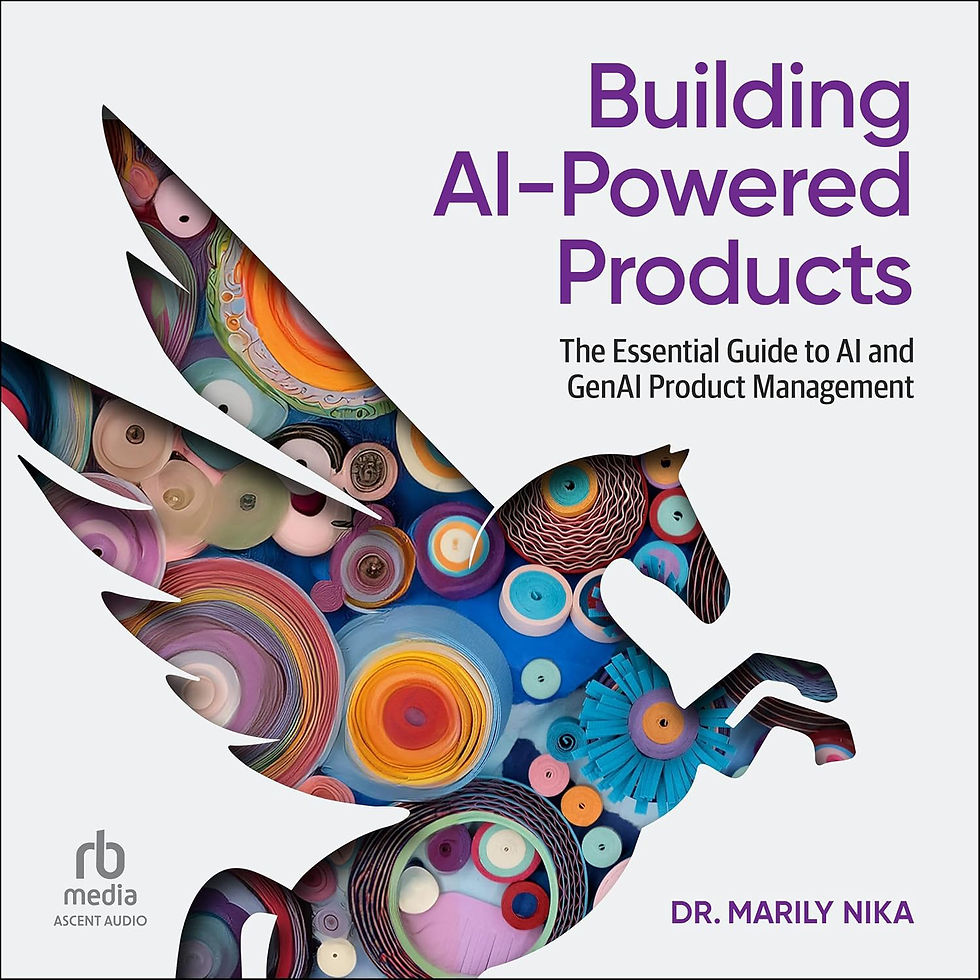
Author: Marily Nika
Short review
Building AI Powered Products shows how artificial intelligence can be used to develop smarter products, services, and digital customer experiences. Marily Nika combines technology, product development, and innovation in an easy-to-read book full of practical, real-world examples.
Why we recommend the book
A book that is perfect for anyone working with digitalization, innovation, product development and user experiences. It shows how artificial intelligence can be used to create products people actually want to use.

Writers: James Phoenix and Mike Taylor
Short review
Prompt Engineering for Generative AI is a practical guide that teaches you how to communicate better with language models like ChatGPT, Claude, Gemini, and other generative AI tools. Through concrete examples, the authors show how good prompts produce more precise, creative, and useful responses.
Why we recommend the book
One of the most practical books on prompt engineering. Perfect for anyone who wants to work more effectively with artificial intelligence and get significantly better results through smarter questions and clearer instructions.

Author: Stuart Russell
Short review
Human Compatible is considered one of the most important books on artificial intelligence and the future of humanity. Stuart Russell explains in an easy-to-understand way why the development of artificial intelligence must be based on human values, ethics and responsibility. The book combines research, philosophy and practical examples, and gives the reader a deeper understanding of both the opportunities and challenges that artificial intelligence represents.
Why we recommend the book
This is a book that anyone who wants to understand artificial intelligence should read. Stuart Russell is one of the world's leading researchers in artificial intelligence, and the book provides a unique insight into how humans and artificial intelligence can develop together in a safe and responsible way.

Author: Janelle Shane
Short review
With humor, warmth, and a host of entertaining examples, Janelle Shane explains how artificial intelligence actually works. The book shows why language models and other AI systems sometimes make surprising mistakes, and how these mistakes help us understand both the strengths and limitations of the technology.
Why we recommend the book
One of the most easy-to-read and entertaining introductions to artificial intelligence. Perfect for those who want to understand how AI works without having to read heavy technical books. A book that makes complicated topics easy to understand.

Authors:Max Bennett
Short review
This fascinating book takes the reader on a journey through the history of intelligence – from the first simple organisms to today’s advanced language models and artificial intelligence. Max Bennett combines insights from biology, neuroscience, psychology and artificial intelligence and shows how understanding the human brain can help us develop better and more responsible AI systems.
Why we recommend the book
A unique book that places artificial intelligence into a larger historical and scientific perspective. Perfect for readers who want to understand what intelligence really is, and why the development of artificial intelligence is a natural part of human technological history.

Author: Sebastian Raschka
Short review
This book takes the reader behind the scenes and shows how a modern language model is actually built – step by step. Sebastian Raschka explains advanced concepts in an educational way and provides a unique understanding of how large language models like ChatGPT work. Although the book contains code examples, it is also very valuable for anyone who wants a deeper understanding of the technology behind artificial intelligence.
Why we recommend the book
One of the most talked about books on large language models. Perfect for those who want to understand how artificial intelligence works beneath the surface and why language models have become a revolution in digitalization and knowledge sharing.

Author: Janelle Shane
Short review
This book provides a practical and easy-to-understand introduction to large language models (LLMs). Sinan Ozdemir explains how language models are used in modern businesses, how they can be integrated into work processes, and why they have become one of the most important technologies in artificial intelligence.
Why we recommend the book
A very good book for anyone who wants a quick and practical introduction to language models. It is suitable for both beginners and professionals who want to understand how LLMs are used in practice.

Authors: Stuart Russell & Peter Norvig
Short review
This is the world's most famous textbook on artificial intelligence and is used in universities worldwide. The book covers the entire subject area – from problem solving and machine learning to language understanding, robotics and ethics – and is considered a classic in the AI field.
Why we recommend the book
If you are only going to own one academic book on artificial intelligence, this is one of the very best choices. A timeless classic that provides a solid academic understanding of artificial intelligence and is still used as a syllabus at leading universities around the world.

Author: Mustafa Suleyman
Short review
The Coming Wave explores how artificial intelligence and other breakthrough technologies will transform work, business, and society in the coming decades. Mustafa Suleyman, one of the founders of DeepMind, combines his own experiences from AI development with analyses of the technology's opportunities, risks, and significance for the future.
Why we recommend the book
One of the most important books on the future of artificial intelligence, the book provides a unique insight into how AI will impact people, businesses and society – and why responsible technology development is becoming increasingly important.

Authors: Gary Marcus and Ernest Davis
Short review
Rebooting AI challenges many of the myths surrounding artificial intelligence. The authors explain what today's AI can actually do, where its limitations lie, and why human judgment is still crucial. The book bridges the gap between research, technology, and practical application.
Why we recommend the book
A thought-provoking book that provides a balanced perspective on artificial intelligence. Perfect for those who want to understand both the strengths and weaknesses of today's language models and AI systems.
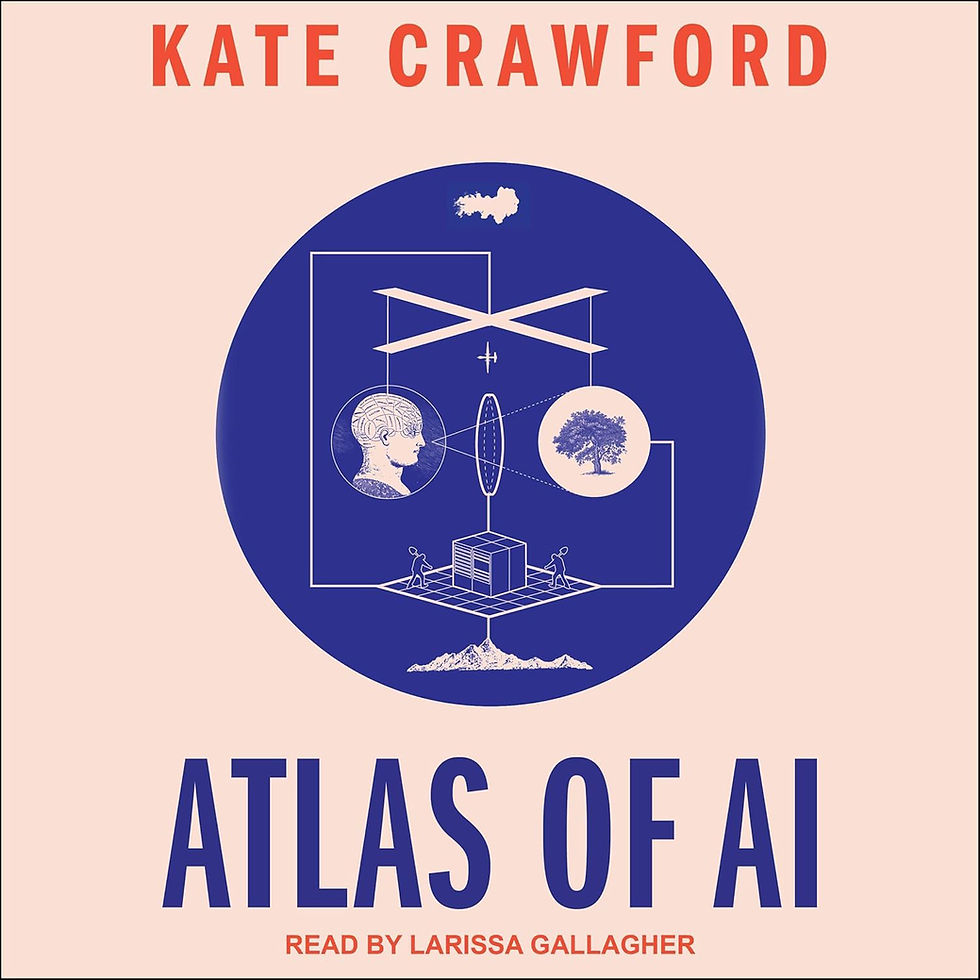
Atlas of AI
Author: Kate Crawford
Short review
Atlas of AI shows that artificial intelligence is about much more than algorithms and technology. Kate Crawford explores how data, energy, people, politics, and economics are interconnected with the development of artificial intelligence. The book places AI in a broader societal perspective.
Why we recommend the book
An essential book for anyone who wants to understand how artificial intelligence is impacting society. It shows that AI is not just about technology – it is also about people, resources, power, knowledge and value creation.

Writers: Arvind Narayanan & Sayash Kapoor
Short review
Artificial intelligence is surrounded by both high expectations and many misunderstandings. In AI Snake Oil, the authors distinguish between what today's AI can actually do and what is still exaggerated or unrealistic. The book provides a fact-based and easily accessible review of the technology's strengths, limitations, and practical applications.
Why we recommend the book
An essential book for anyone who wants a realistic view of artificial intelligence. It is especially suitable for leaders, decision-makers, and anyone who wants to separate fact from hype.

Author: Pam Baker
Short review
Generative AI For Dummies provides an easy-to-understand introduction to generative artificial intelligence. The book explains key concepts, shows practical examples, and gives the reader a safe start on how the technology can be used in work, education, and everyday life.
Why we recommend the book
A very good introductory book for anyone who is curious about generative AI, but who does not necessarily have a technical background.

Author: Ethan Mollick
Short review
In this expanded edition, Ethan Mollick builds on how artificial intelligence can function as a collaborative partner in the workplace. With new examples and updated reflections, he shows how humans and AI can create more value together.
Why we recommend the book
One of the most practical and inspiring books on how artificial intelligence can be used in everyday life and in businesses. Suitable for managers, employees and students alike.
A little ending
Knowledge is constantly evolving, and so is this site. As new books are read, new research is published, and new perspectives emerge, the collection will be updated. The goal is to build a living scholarly library that can inspire both today's and tomorrow's readers.

© 2025 - 2026 Portico Publish | The invisible capital Privacy and use of the website | Developed and operated by Magne Bjella | Powered and secured by Wix



Comments