
Part 19 - AI-Buddy... why does a website need to introduce itself?

When we meet someone new, we often introduce ourselves by name, who we are, and what we do. In the same way, a website needs to tell us who it is and what it’s about. This information isn’t primarily for humans – it helps search engines, browsers, and artificial intelligence understand the content. But why is this so important?

Magne & the Friend
Magne
Friend...
I'm starting to see a common thread.
When people meet, we introduce ourselves.
We say what our name is.
What we are working on.
What we are concerned about.
A website does the same thing, right?
The buddy
Yes.
That's actually a very good comparison.
A good website also presents itself.
Not just for the people who visit it.
But also for the technology that will understand it.
It tells:
What is this page about?
Who is behind it?
Why does this page exist?
How does it relate to the rest of the website?

Magne
But...
I don't see most of this when I visit a page.
The buddy
No.
Because some of this information is designed for recipients other than humans.
Think of it as a name tag.
You might just see the person.
But the name tag helps you understand who you are talking to.
A website also has such "nameplates".
They make it easier for different systems to understand what the page is about.
Magne
So...
Does a website really speak to more than just the people who visit it?

The buddy
Exactly.
It communicates with:
people
browsers
search engines
accessibility tools
artificial intelligence
Everyone needs slightly different information.
And a good website manages to convey it without compromising the user experience.
Magne
So when we take the time to write good titles and descriptions...
Is there really a way to present our website?

The buddy
Yes.
And perhaps even more importantly.
It's a way to make it easier to understand.
The more clearly the website presents its content, the easier it will be to find, interpret the information and use it further.
Academic specialization
In this section, we introduce the idea of metadata – without starting with HTML.
We explain that a website communicates on several levels:
What people see.
What the technology reads.
That website speaks for itself.
Only after this understanding do we show that this information is conveyed, among other things, through metadata.
That way, we start with the purpose – not the technique.
A website has multiple recipients
Recipient | What does the recipient want to understand? |
Visitor | What the page is about, and whether it answers their needs. |
Search engine | What the page contains and when it should appear in search results. |
Artificial intelligence | Theme, context, quality and how the content can be used. |
Browser | How the page should appear on different devices. |
Accessibility tools | How the content can be made understandable for all users. |
New terms in this article
English technical term | Short explanation |
Meta Description | A short description of the page's content that can appear in search results and helps the user understand what the page is about. |
Web Browser | The program used to view web pages, such as Chrome, Edge, or Firefox. |
Search Engine | A service that finds and organizes information from websites. |
Structured Information | Information that is organized in a way that makes it easier for computers to interpret. |
Digital Identity | How a website presents itself through content, structure and descriptions. |
Description | A short explanation that summarizes the content of a page. |
Presentation | The way information is conveyed to people and digital systems. |
Communication | Exchange of information between people, systems and technology. |
We have only just begun.
Magne
Friend...
Now I understand why metadata exists.
But what does such metadata actually look like?
The buddy
Hehe...
Now you're ready to take a look behind the scenes.
In the next article, we'll open the hood of a website and see what meta titles and meta descriptions actually look like – and why a few lines of text can have a big impact on how humans and artificial intelligence perceive the content.
Academic background and further reading
This series also builds on my own professional journey through the Web Design study , the eMarketing study , Innovation and Commercialization and professional seminars in San Francisco and Oxford . Here you will find the background, professional environments and experiences that have followed the development from the early years of the web to today's digitalization.


Recommended books from our library

AI Engineering
Author: Chip Huyen
Short review
AI Engineering is one of the most relevant books on how artificial intelligence is developed and put into practice. Chip Huyen explains how language models, data, machine learning, and modern work processes can be combined to build robust AI solutions. The book provides both a strategic and practical perspective on how businesses can create value with artificial intelligence.
Why we recommend the book
This is a book for those who want to move from understanding artificial intelligence to understanding how it is actually developed, implemented, and creates value. One of the strongest books we have found on the practical use of artificial intelligence.
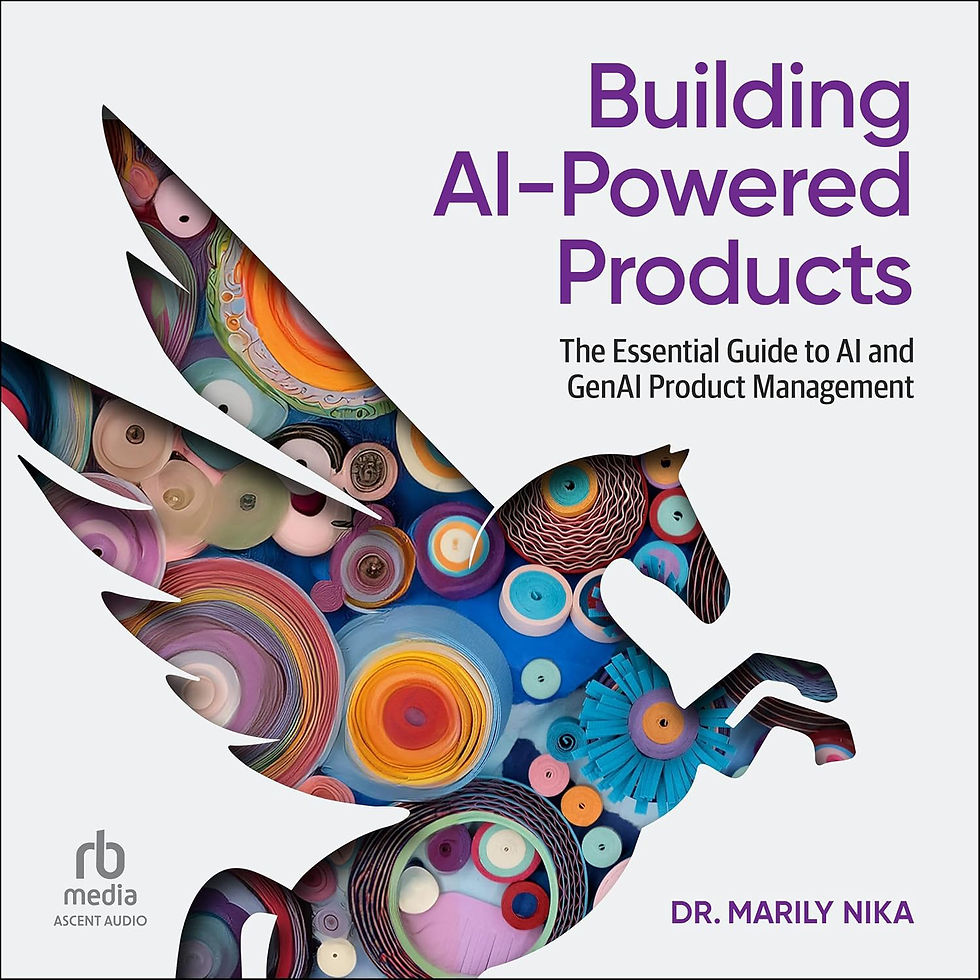
Building AI Powered Products
Author: Marily Nika
Short review
Building AI Powered Products shows how artificial intelligence can be used to develop smarter products, services, and digital customer experiences. Marily Nika combines technology, product development, and innovation in an easy-to-read book full of practical, real-world examples.
Why we recommend the book
A book that is perfect for anyone working with digitalization, innovation, product development and user experiences. It shows how artificial intelligence can be used to create products people actually want to use.

Prompt Engineering for Generative AI
Writers: James Phoenix and Mike Taylor
Short review
Prompt Engineering for Generative AI is a practical guide that teaches you how to communicate better with language models like ChatGPT, Claude, Gemini, and other generative AI tools. Through concrete examples, the authors show how good prompts produce more precise, creative, and useful responses.
Why we recommend the book
One of the most practical books on prompt engineering. Perfect for anyone who wants to work more effectively with artificial intelligence and get significantly better results through smarter questions and clearer instructions.

© 2025 - 2026 Portico Publish | The invisible capital Privacy and use of the website | Developed and operated by Magne Bjella | Powered and secured by Wix


Comments